MATERIALS ARCHIVE
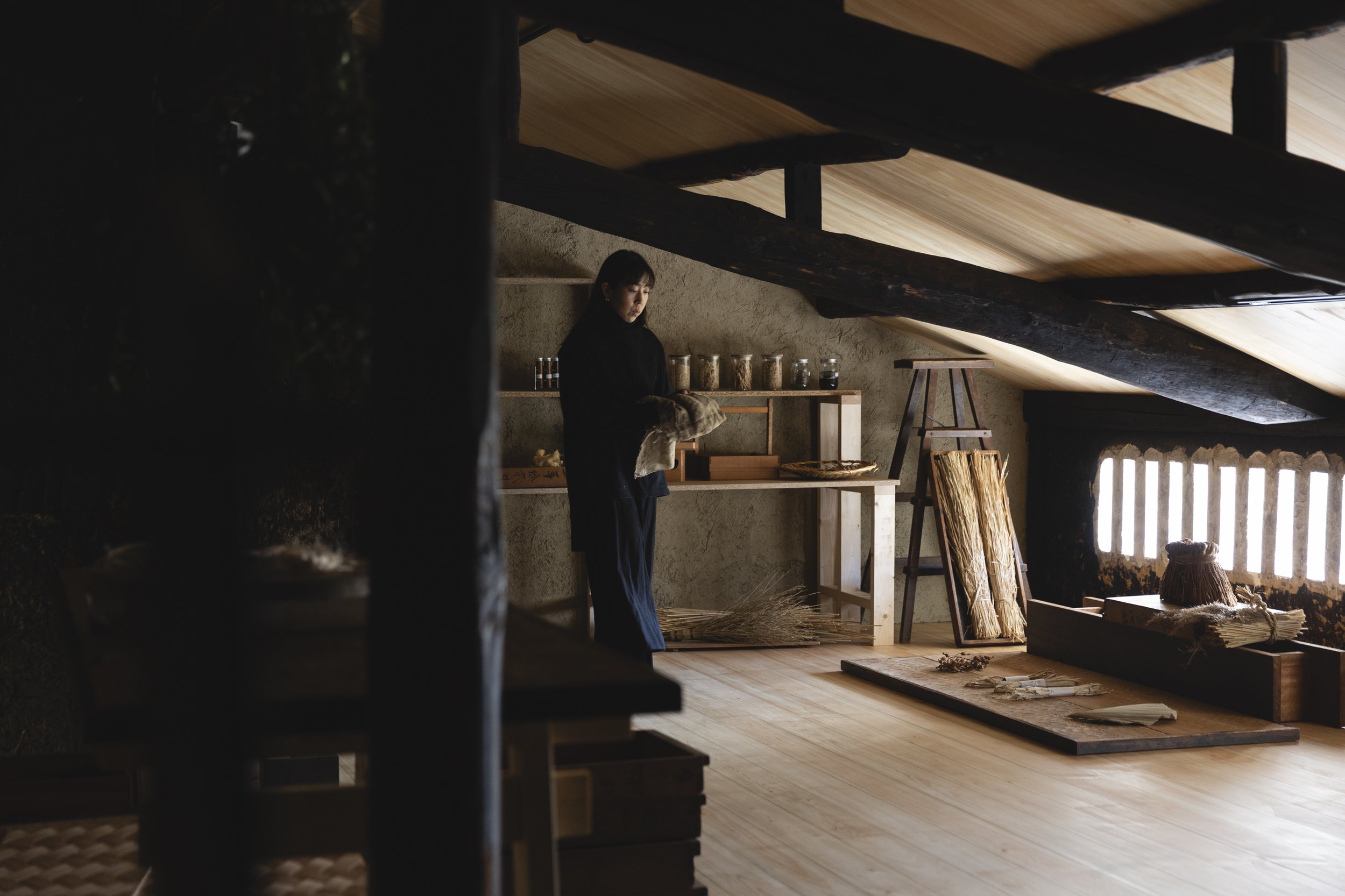
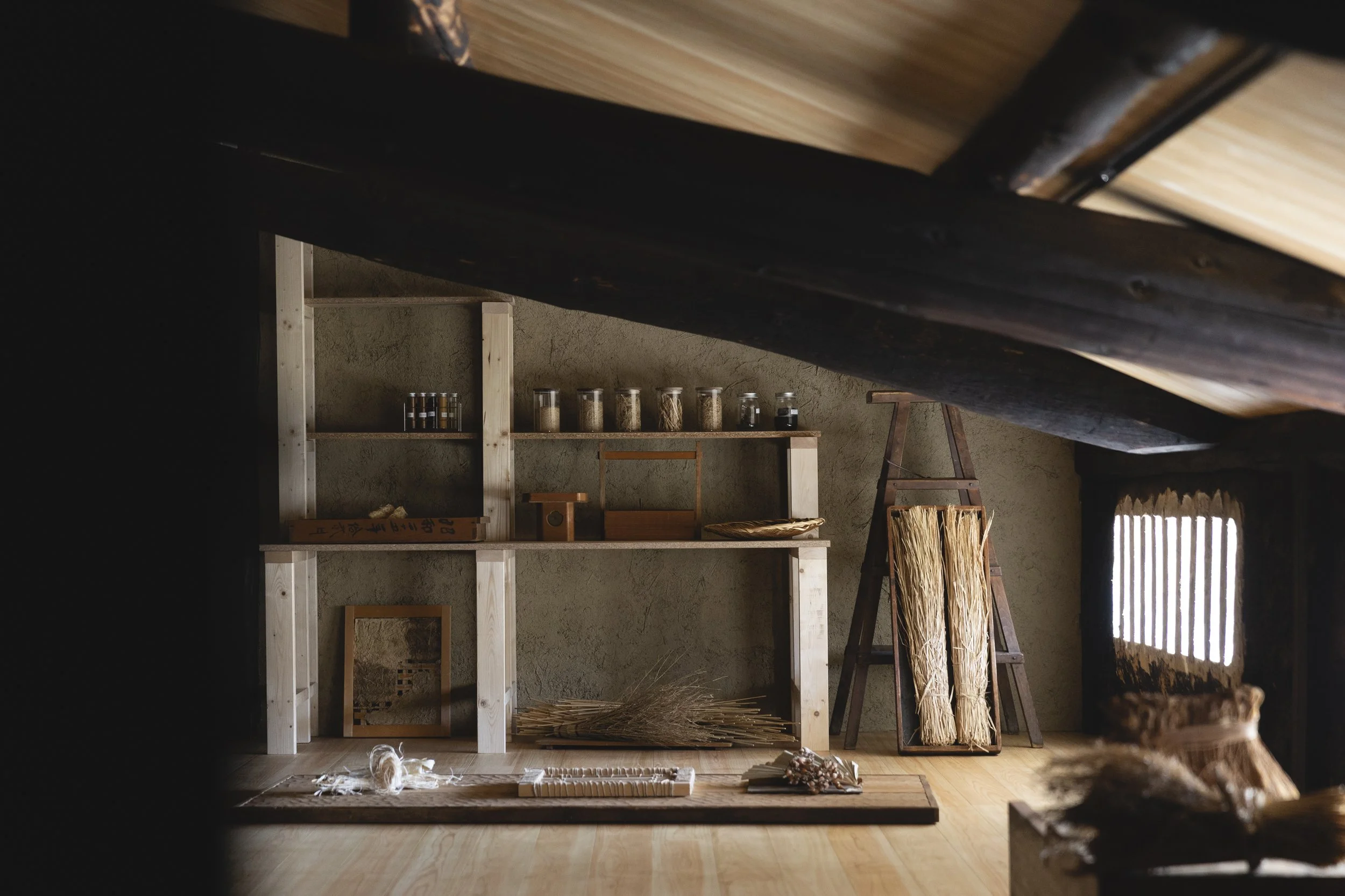
Kyoto Research Institute’s Materials Archive is a collection of heritage materials and the raw natural resources from which they are made. This archive is a way for us to share the daily fieldwork we conduct across Japan in a concise manner, so that you can peruse a spectrum of heritage materials with the goal of applying learnings to your own work.
Visit MATERIALS ARCHIVE
The Materials Archive can be visited by booking Office Hours. We welcome professionals, semi-professionals, and industry-adjacent professionals who can leverage the knowledge we have cultivated through our fieldwork to transform heritage materials into new physical, experiential, and social possibilities.
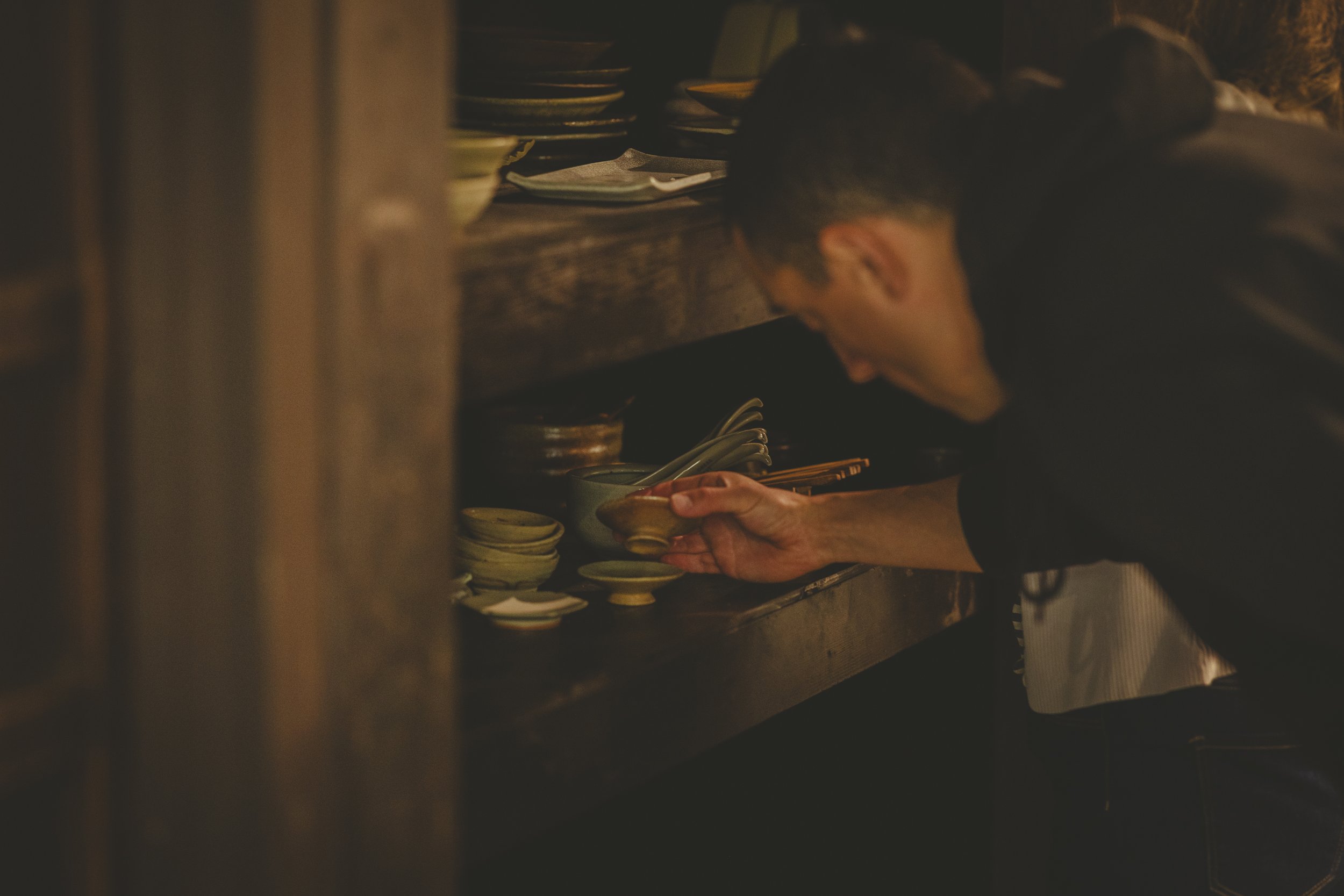
A SNIPPET OF THE ARCHIVE
TSUCHIKABé
Earthen Wall
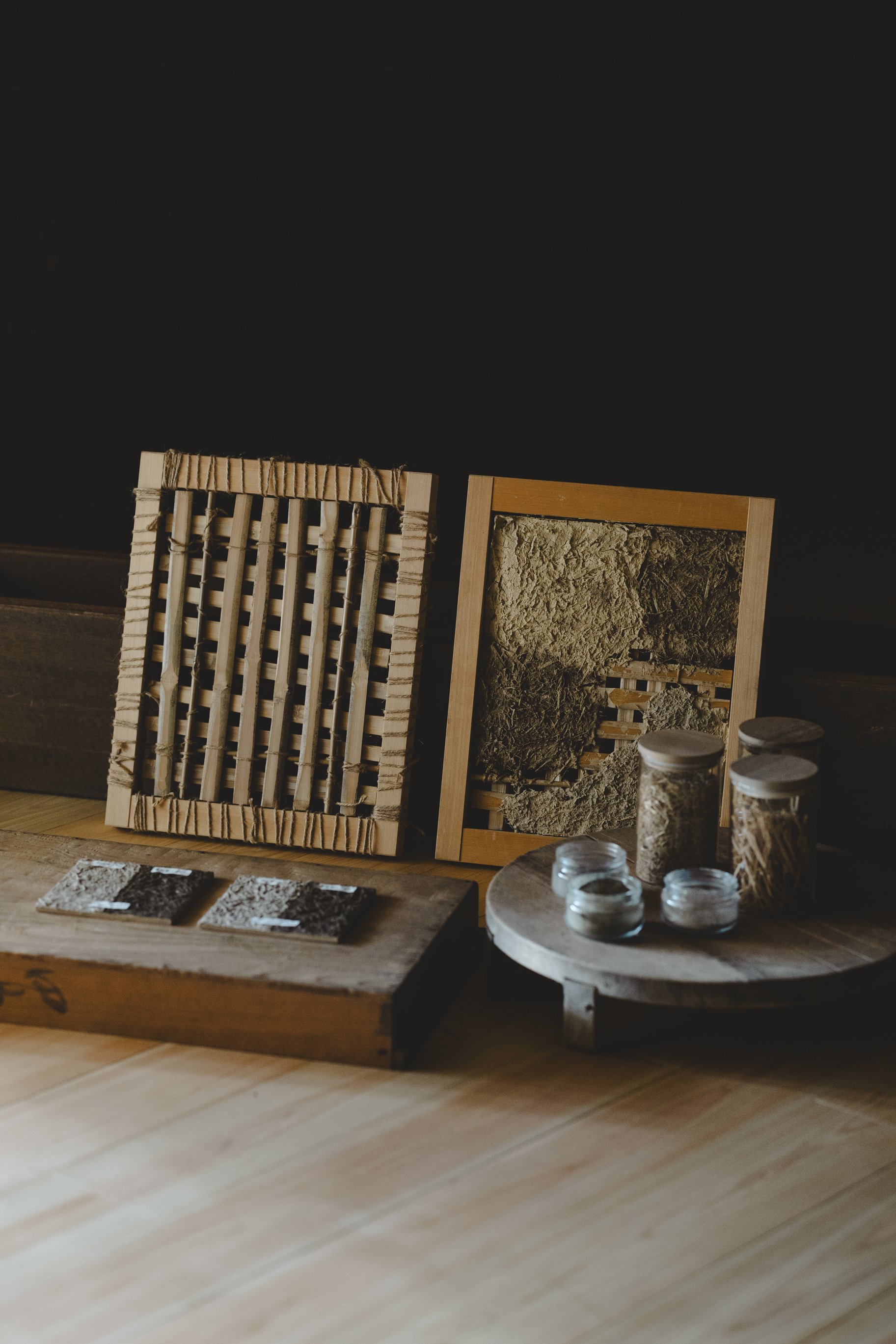
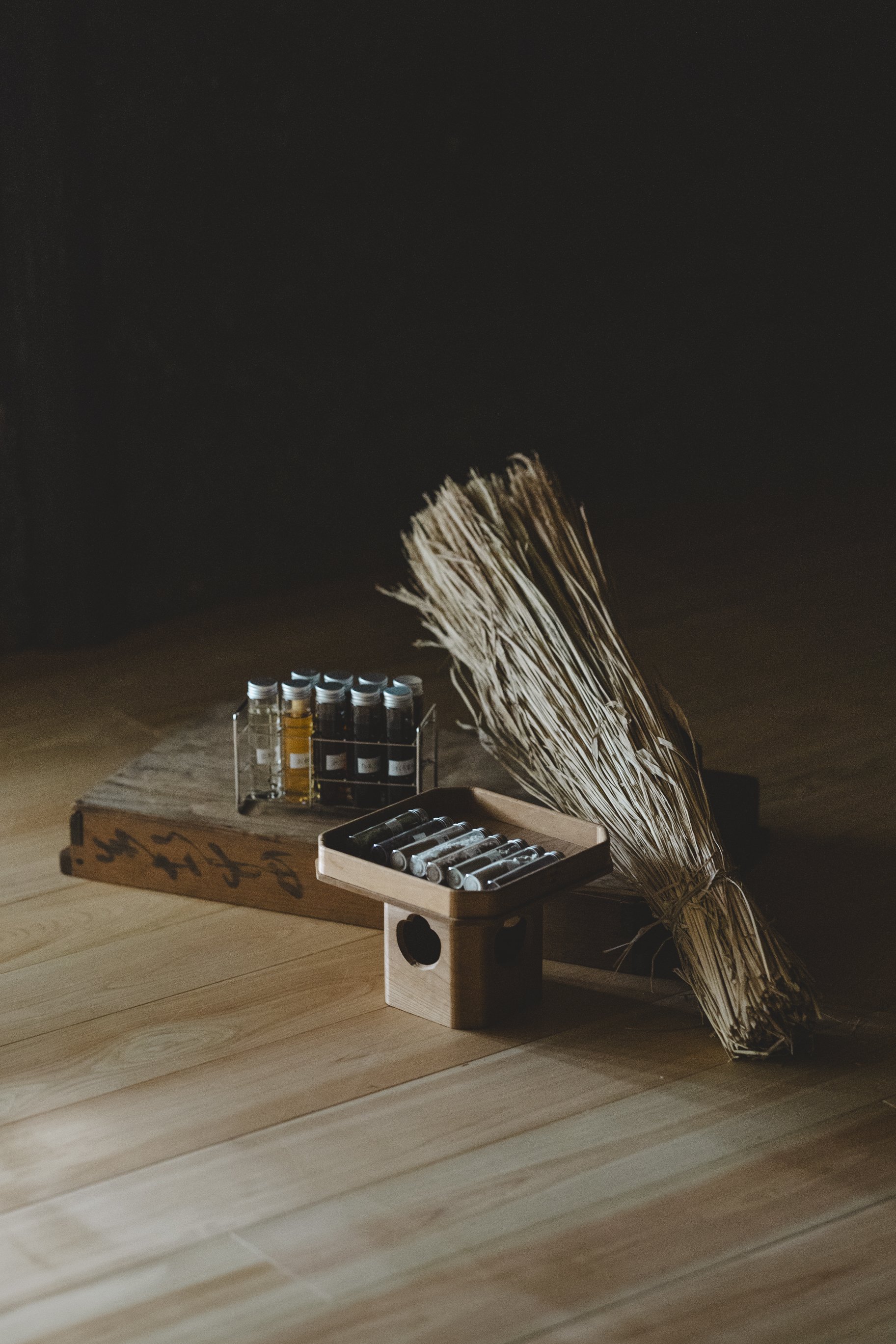
Japanese earthen wall made of fermented rice straw and seaweed, create a textured surface. When sunlight, moonlight, or more intentional lighting is placed in a room, the embossed and debossed surface create random shadow. It is said that experiencing organic shadow and light is what creates a calming quality in an otherwise strictly manmade space. In addition to tsuchikabé being practical and environmentally responsible construction material, they remain vital to tea houses and meditation rooms because of their positive affect on mental wellbeing.
Traditionally, tsuchikabé construction requires hyper-regional clay, fermented rice straw, sand, and seaweed. This is applied to a bamboo lattice, a structure woven together with hemp rope. The walls are responsive to the interplay of humidity and breathability across four very different seasons. When ambient moisture rises, these walls absorb and regulate it, releasing it later as the air cools. Similarly, tataki technique for doma floors, uses compacted clay, lime, and bittern, harden over time while allowing subtle air and water exchange.
While Daiku construct the skeletal framework for the home using mostly wood and some stone, Sakan construct the walls and floors, essentially the meat of the building. Always adjusting application style and ratio of materials based on humidity, temperature, and wind factors. Like a printed photograph, tsuchikabé ages in a way that cannot be mimicked. Essentially capturing that moment in time, while also revealing cracks, and evolving in color and texture.
CHAZOMé
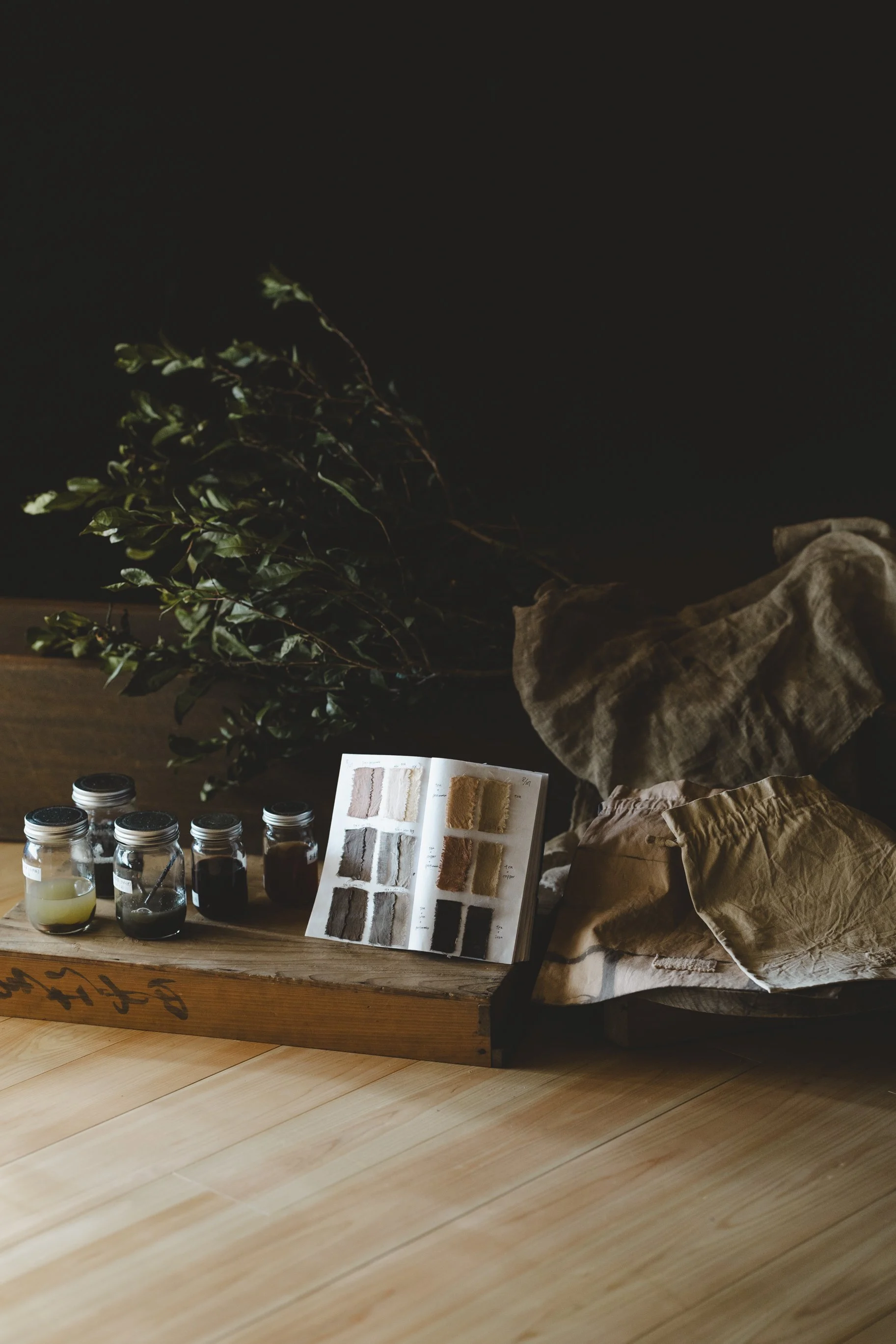
Tea Dye
While tea cultivation is said to have formally begun in Japan just under 800 years ago, the practice was few and far between. And for well over 500 years thereafter, tea drinking was only enjoyed by high ranking Buddhist monks and the aristocratic class.
However by the late 1600s, sencha production style took shape, and with this uniquely Japanese green tea came uniquely Japanese tea tools and vessels. All the while, tea dyeing evolved and expanded in parallel with tea drinking culture.
The word “chairo”, literally “tea color” that we equate to “brown”, traces its origins to the 1300s when braised tea was first used to dye textiles. The tea leaves that we use to research the characteristics and use cases for tea dye is sourced from Kameyama.
Kameyama is a historically tea growing region, with celebrated Buddhist monk Kukai introducing his preferred seedling to the area over 1100 years ago. Since then tea cultivation has gone quiet in this part of the country due to socio-economic reasons over the past century, and this has given way to the growth of wild tea. As tea has become a booming industry with cultivation done en masse, it is a rare opportunity to play with truly wild tea leaves that offer subtly distinct hues depending on the batch.
When finished with mordants like copper or iron, the color is evolved and becomes fixed. Creating a range of colors from nudes, to browns, nearly black. In parts of Japan like the island of Amami Oshima, the ecology allows for botanical dyes that are fixed with mud. The soil contains a high concentration of iron that originates from clay strata that formed 1.5 million years ago. Incredibly well suited to the tannin content of tea.
WASHI
Japanese Paper
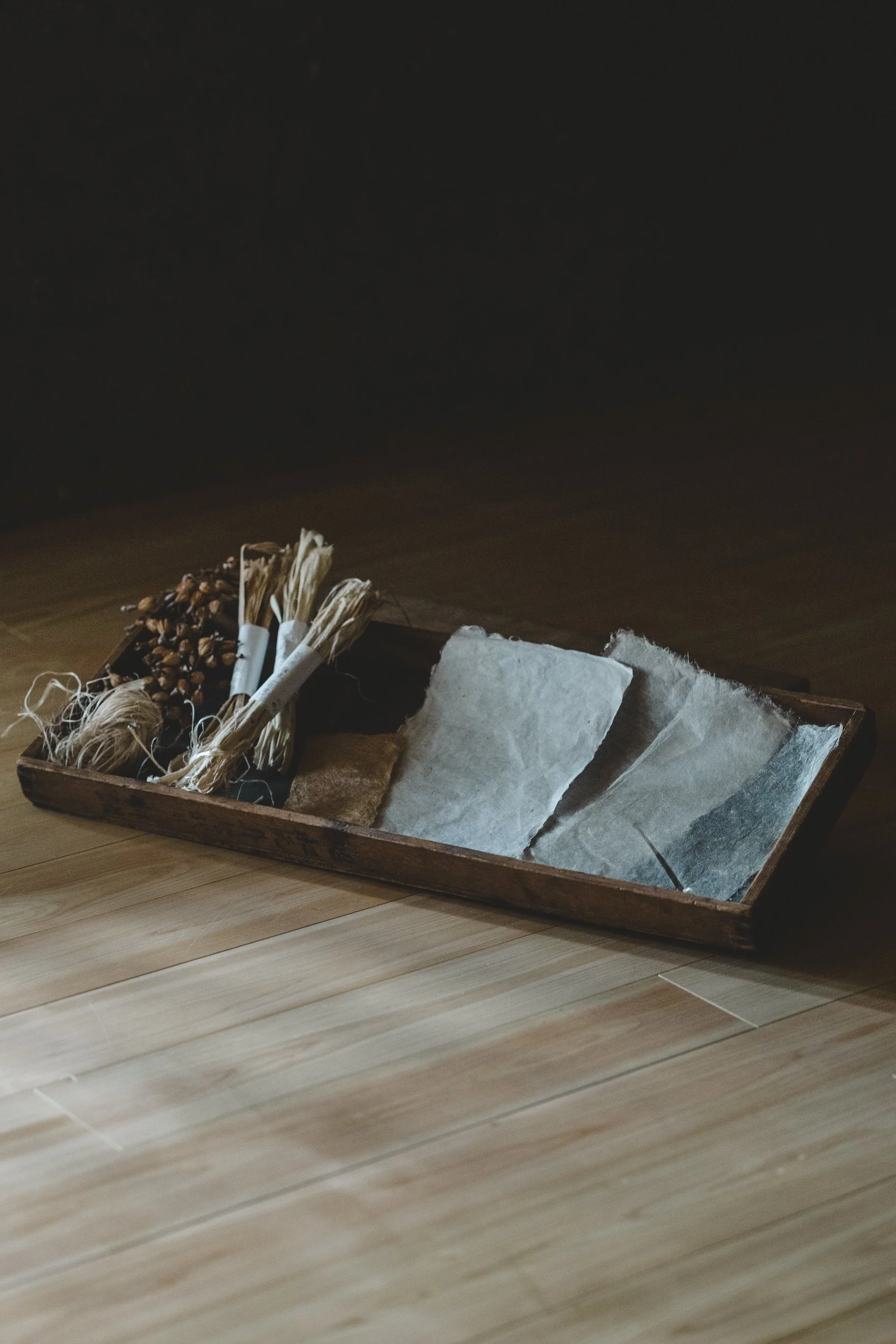
Washi, literally “Japanese paper”, has become a well-known word worldwide. However the word itself is very new. Only about 100 years old. As it served to differentiate from Western paper-making technique.
Western paper-making technique makes a pulp from fibrous plants, sifting out the water to make paper. Washi on the other hand pounds and shreds fibrous plants to create thread, and sifts out the water to make paper. During the sifting process, the threads move about and naturally weave into one another. As such, washi is closer to a textile than what we know to be paper. And serves as a valuable heritage material used to build furniture and architectural structures, in addition to its use for writing and painting.
Just like all other heritage materials, washi is possible thanks to raw natural resources like gampi, mitsumata, kouzo, gettou, choma, noriutsugi. Depending on the region, hyper-local plants are used to make washi. And often, those same plants are used to make clothing. Sometimes mountain water isn’t enough to breakdown the fibrous grasses and woods. This is when onsen hot spring water is leveraged for its heat and high mineral content.
KYOAI
Heirloom Kyoto Indigo
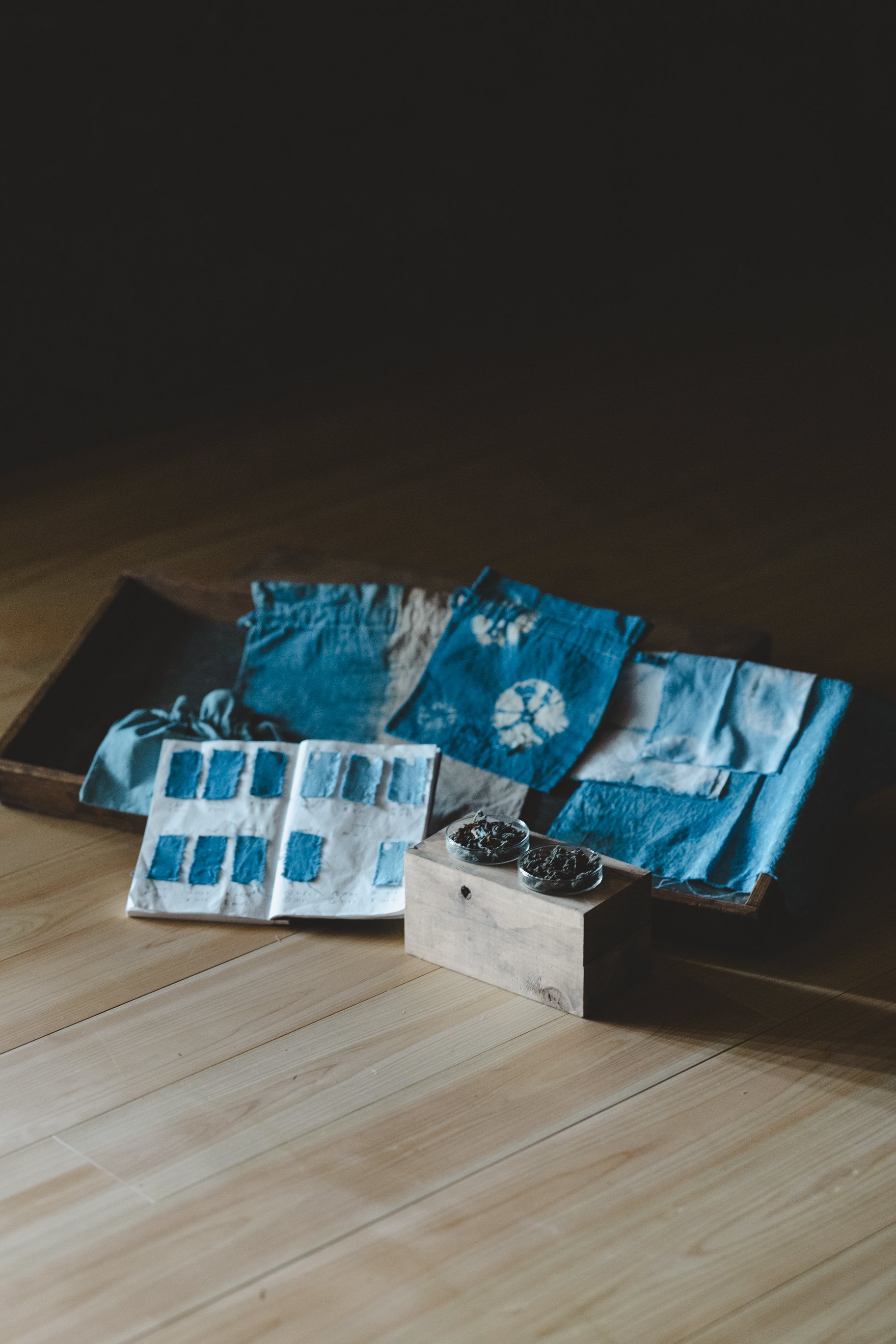
Historical artifacts and written documentation of the heirloom varietal of Kyoto indigo used as a highly revered textile dye can be traced back about 1300 years. Once lost in the early 20th century, Kyoai, with its unique white flower, was kept by seed savers in Tokushima, and over the past decade its cultivation and use as a textile dye has been resurrected by one young artisan, Riku Matsuzaki.
Kyoai is farmed in rice paddies, flooding fields with the water on which the city of Kyoto essentially floats. This bounty of beautiful water is what is said to make Kyoto’s tofu, nihonshu saké, dashi, and of course nurture the growth of rice and Kyoai.
Japanese indigo is not only a colorant but another vital layer of additional protection. Its antibacterial and fire retardant properties have long-served Japan both physically and spiritually. “Wearing” our medicine, rather than oral administration. Fermented Kyoai leaves make a new home within the fibers of thread or fabric, and when those fibers are raised from the liquid to breathe in air for the very first time, the oxidization process turns the fibers into a spectrum of blue hues. Before the fibers evolve into a blue color however, like lightening, there is a brief moment, when the thread or fabric flashes a golden green color. This extremely ephemeral color has become known as asagi or shallow leek.
KAISO
Seaweed
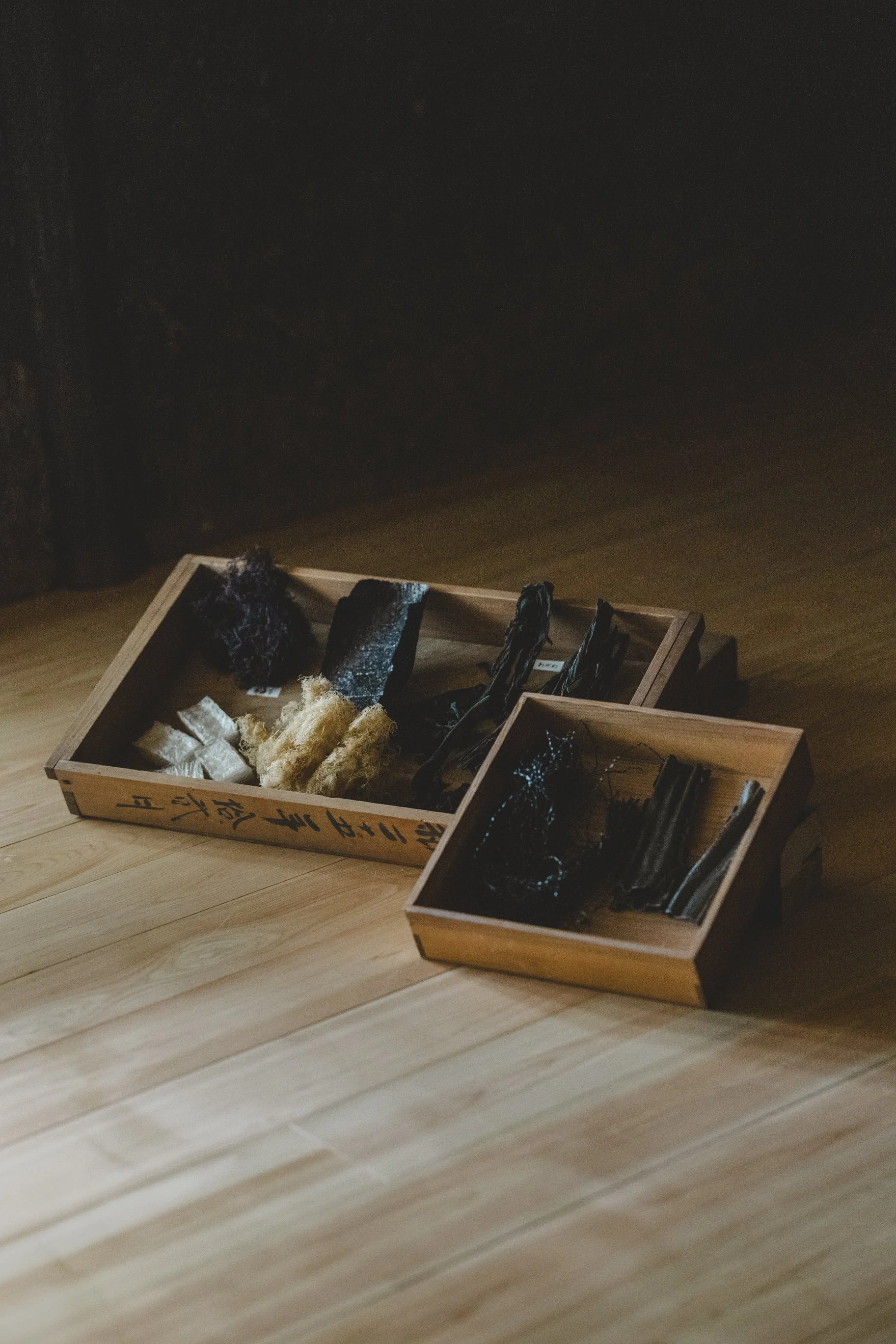
Japan is said to be made of one part mountain and one part sea. As inhabitants of a long archipelago, we have developed a deep relationship with seaweed over what is said to be our nearly twenty thousand year cultural history.
Seaweeds have supported our livelihood in the form of our most fundamental everyday food things like braises, pickles, soups, and rice dishes. It is also a vital architectural construction material, particularly used in the building of earthen walls. And seaweed can also be found in textile design. Used as a means for precise layering color onto fabric in regions spanning from the snowy north to the tropical south.
Includes kombu, wakamé, hijiki, Japanese people are most familiar with brown varieties. Red are by far the most prolific along the Japanese coastline. Found in the deepest waters. Nori is a familiar variety. And green is the rarest, and perhaps the most coveted. Some are incredibly fragrant, others are used for historical ceremonies.
KOJIKIN
Koji Mold
If umami is a superpower, then koji spores are a vital fuel for that superpower.
So essential to Japanese food culture, koji has been deemed Japan’s national mold.
It has long been considered the foundation of Japanese flavor. Koji enables the making of miso, shoyu, nihonshu saké, vinegars, mirin, pickles to name a few of our most valuable food things. It is our secret hero ingredient. Without its inoculation of mostly rice, barley, soy beans, the Japanese table would not be what it is today.
Japan’s classic koji-based pantry items offer depth and umami. Making simple seasonal ingredients satisfying and nourishing.
Our research begins with the biology of koji, its fermentation process, and the community culture around it.