WORKWEAR HAORI
A jacket created through local fieldwork and interviews with generational craftspeople in traditional professions across Japan.
Free shipping worldwide.
More information and photos detailing the case study is here.
————
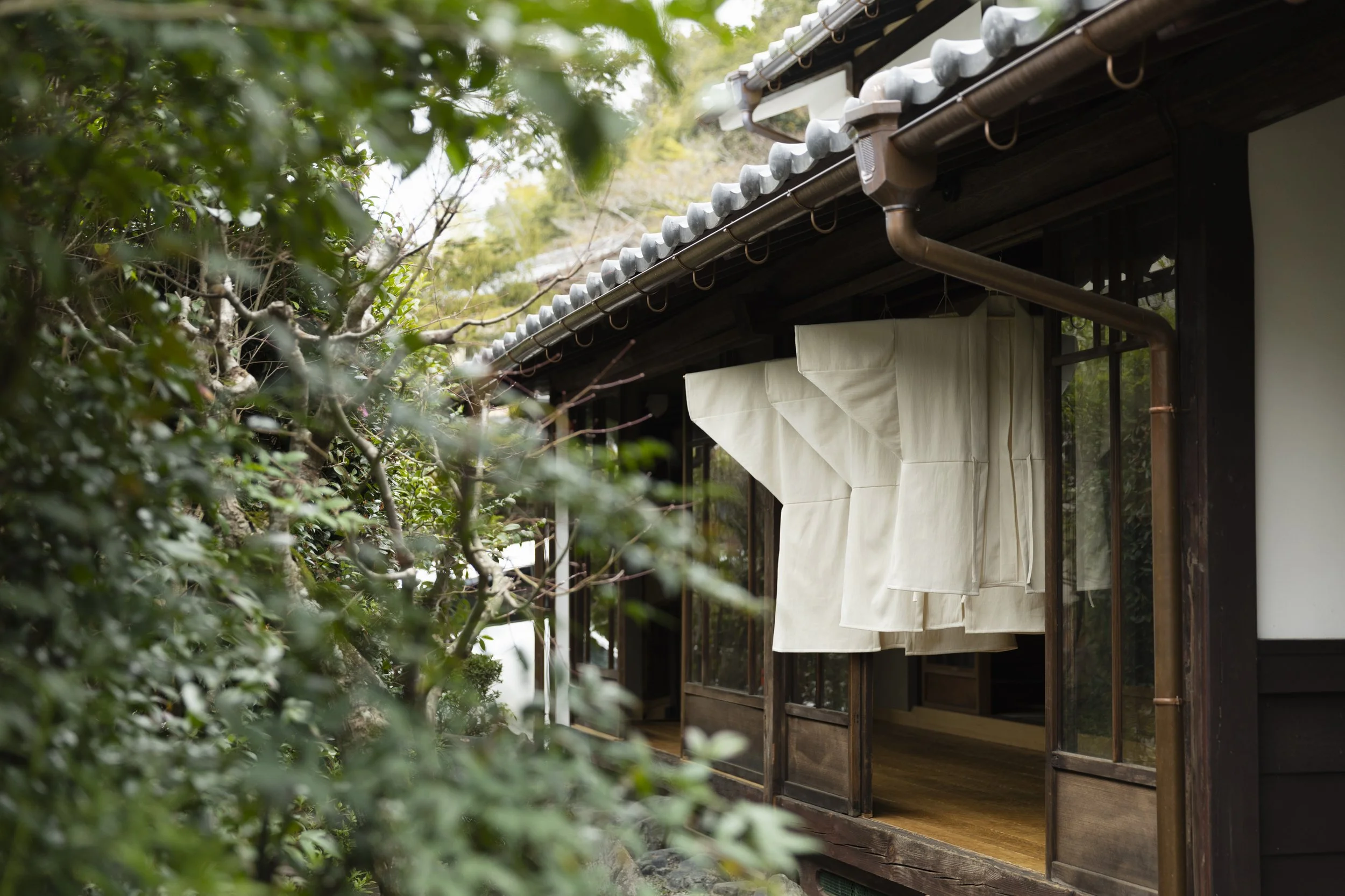
Whether farmer, fisherman, or fermenter, many working-class professionals have historically worn cotton. Without a means or an interest to separate work and life, workwear is dailywear. It is history, family, functionality, and identity.
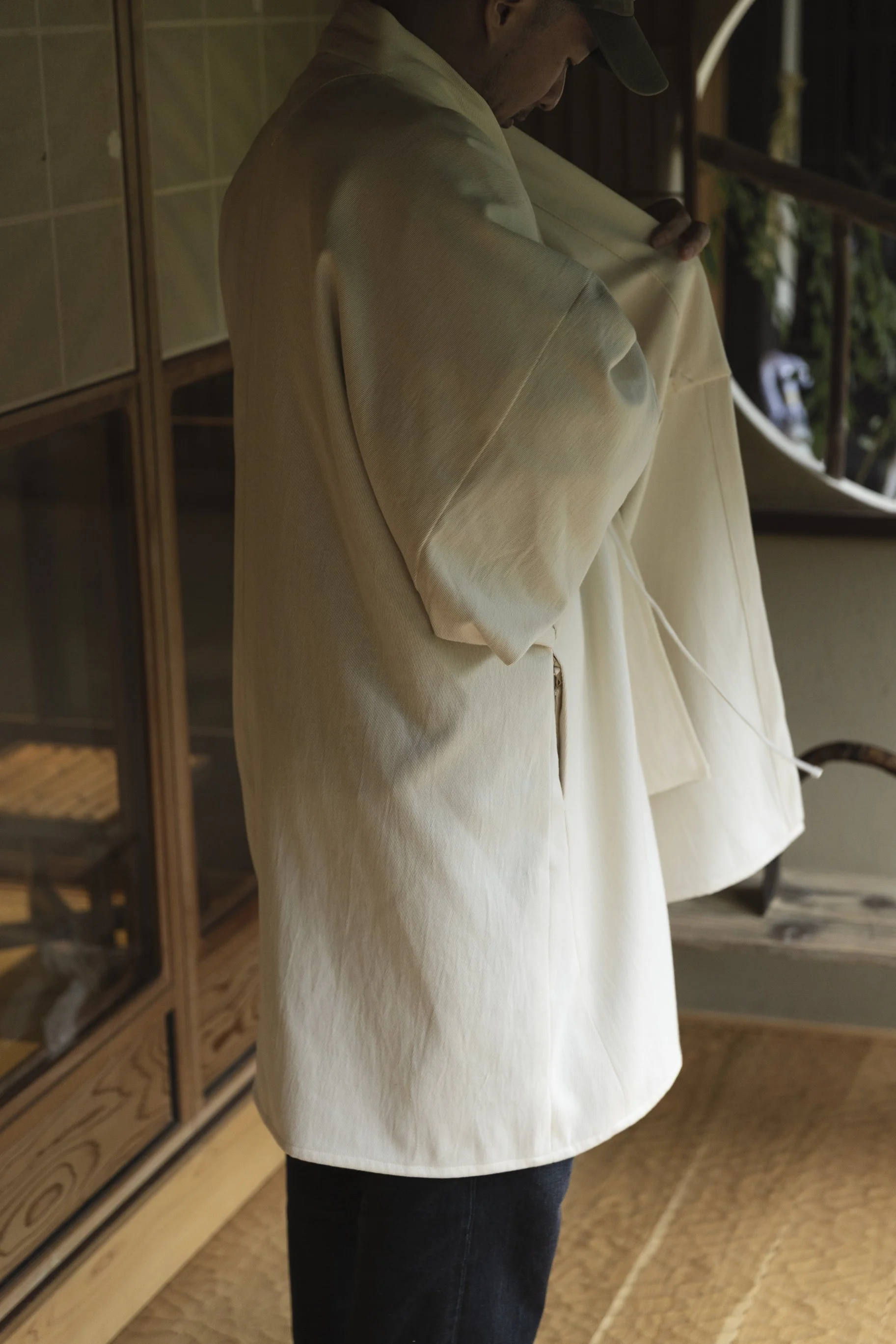
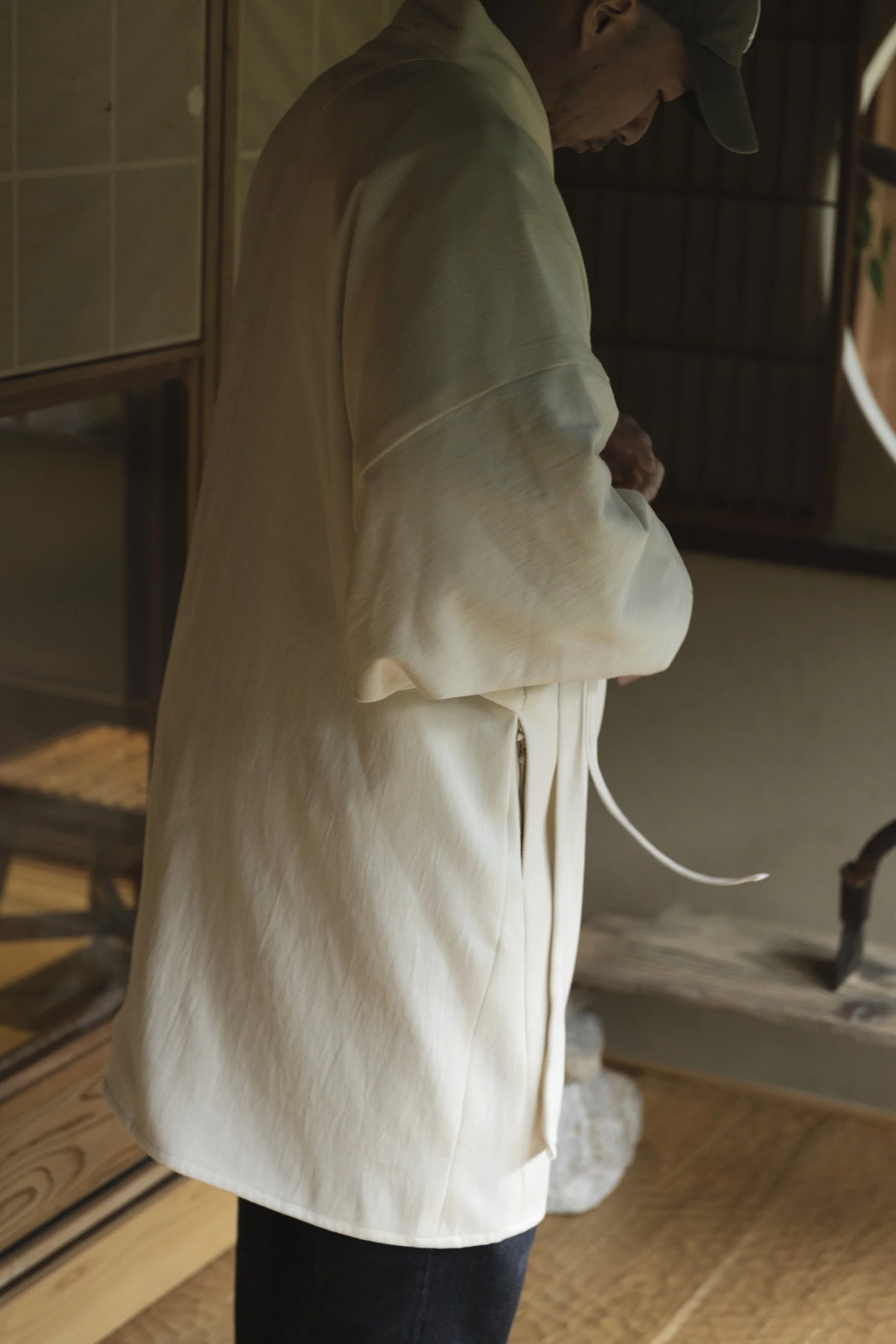
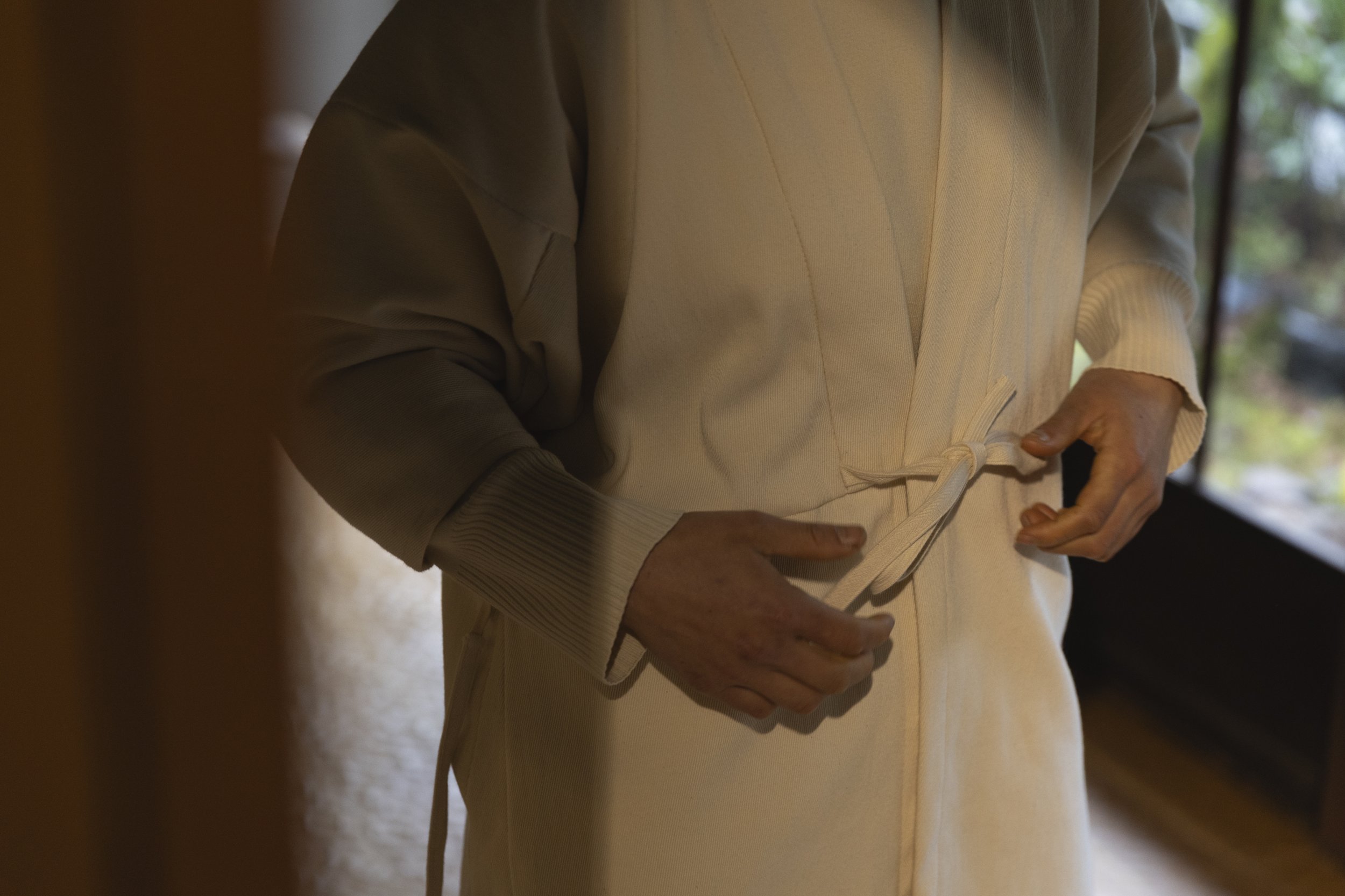
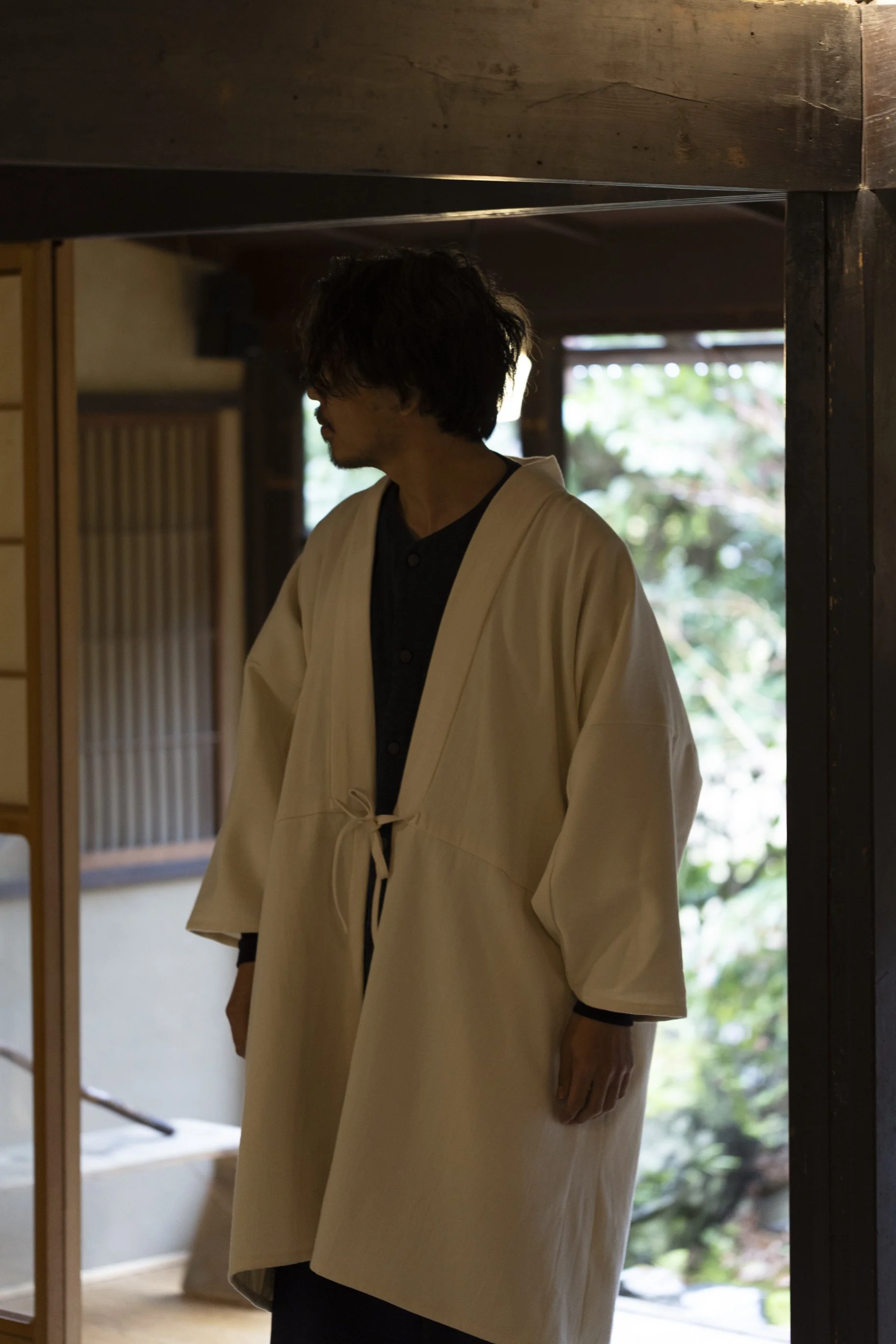
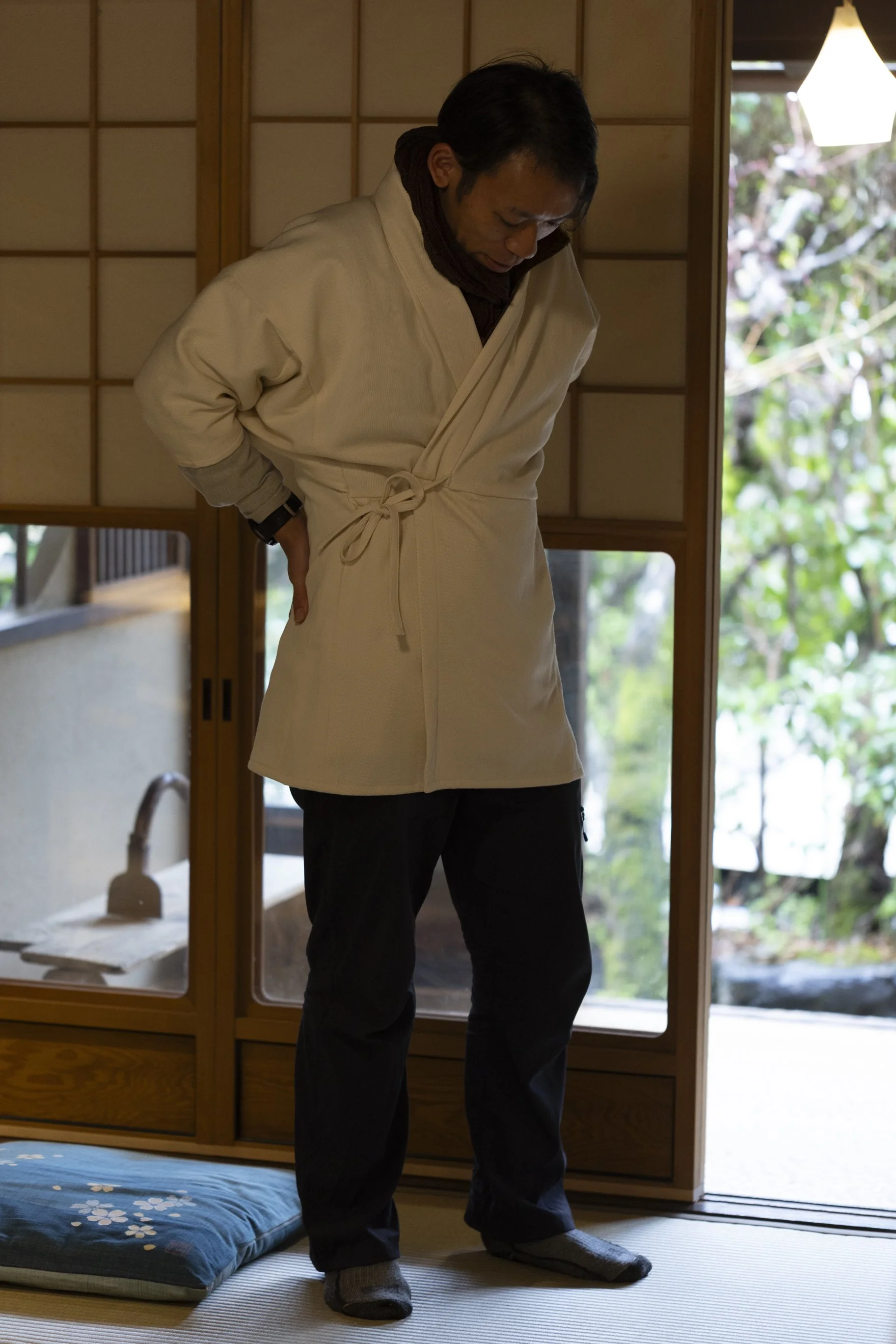
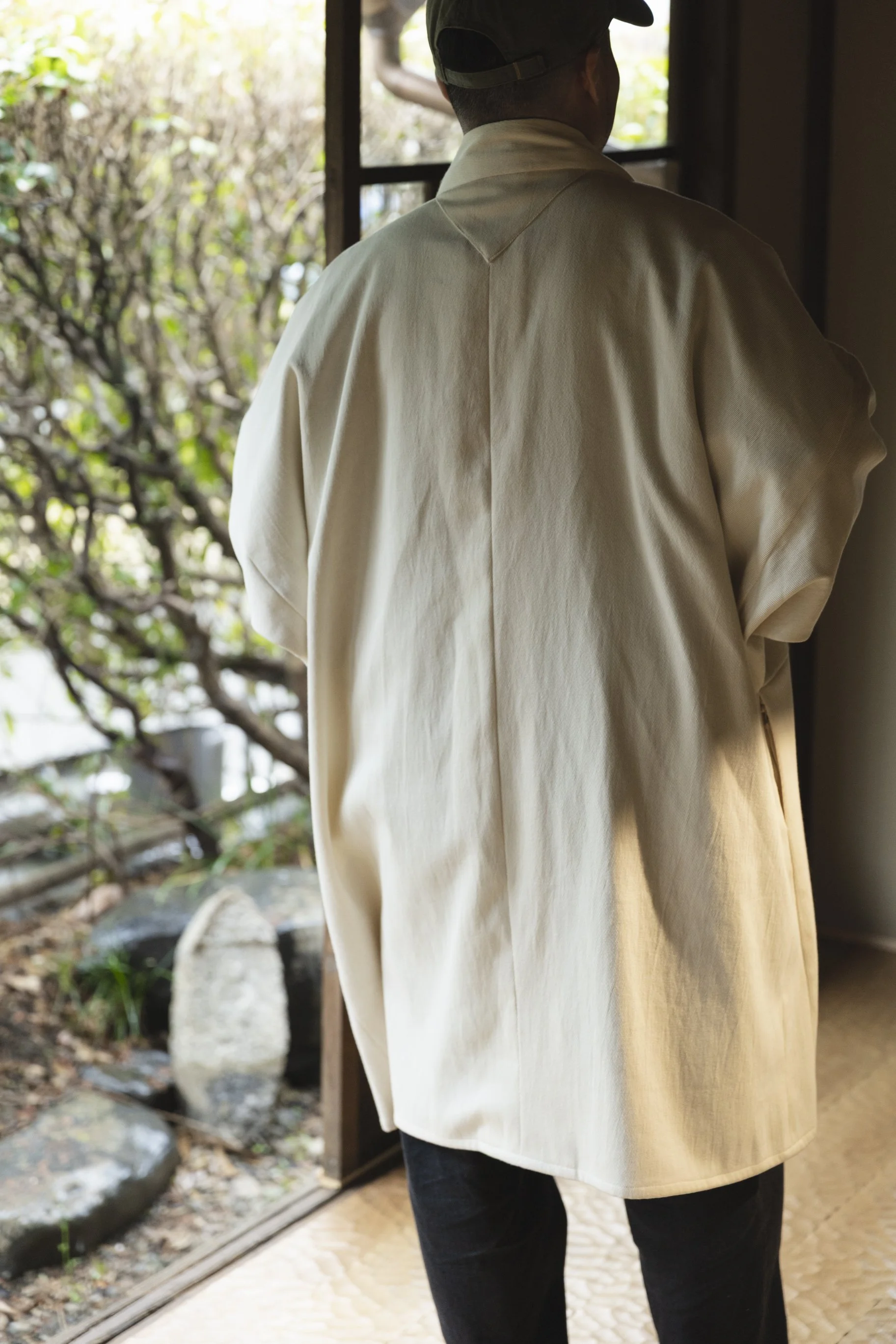
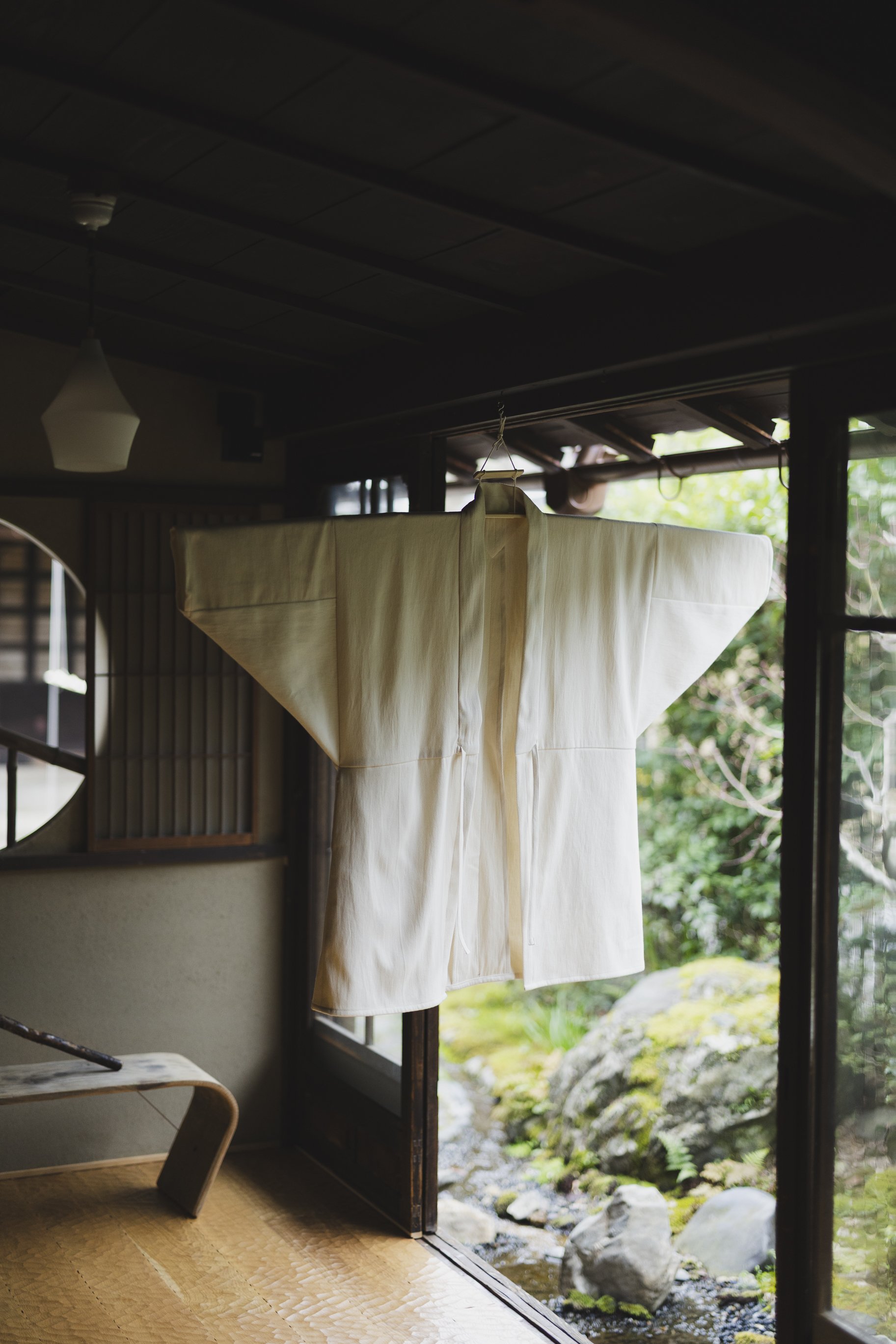
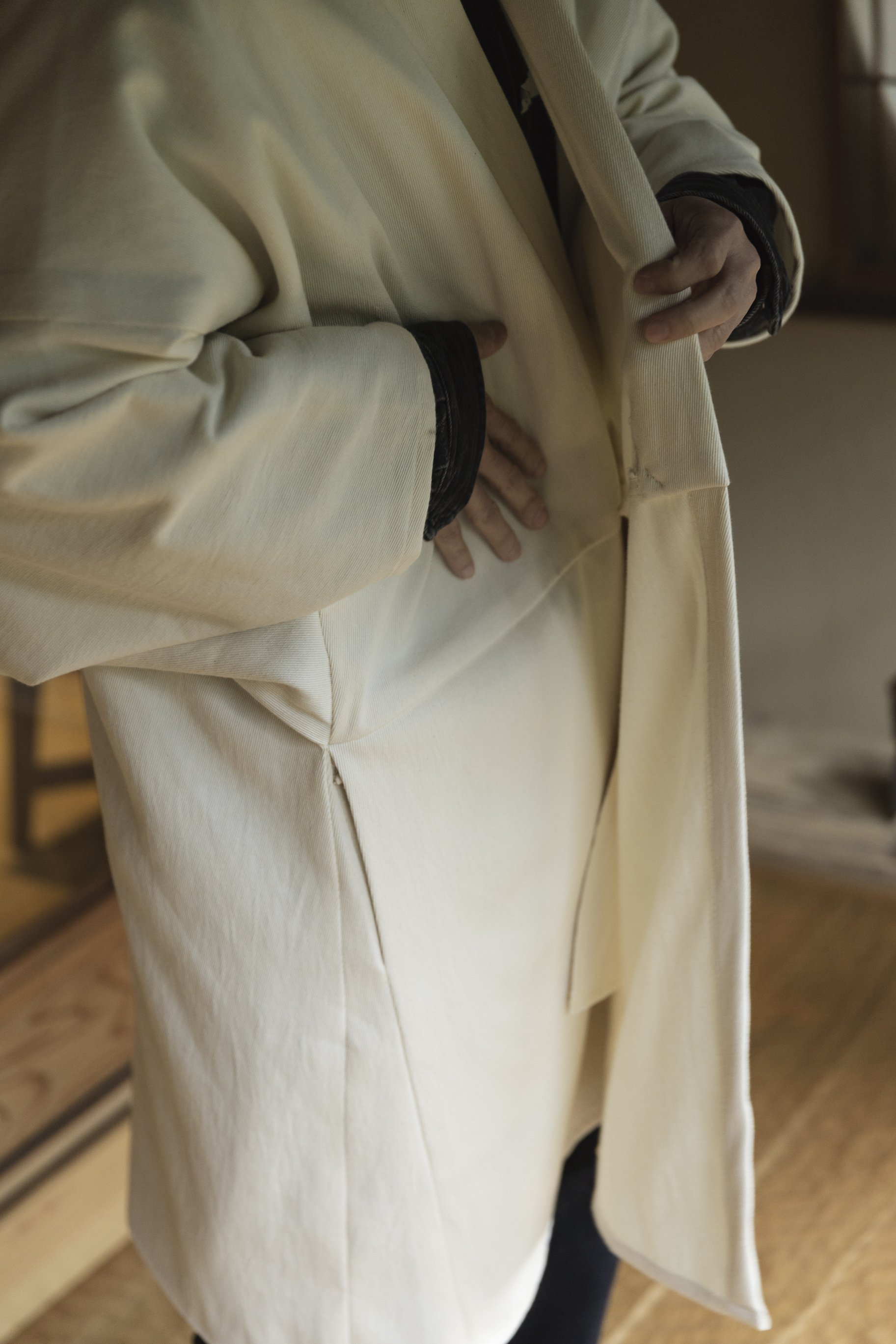
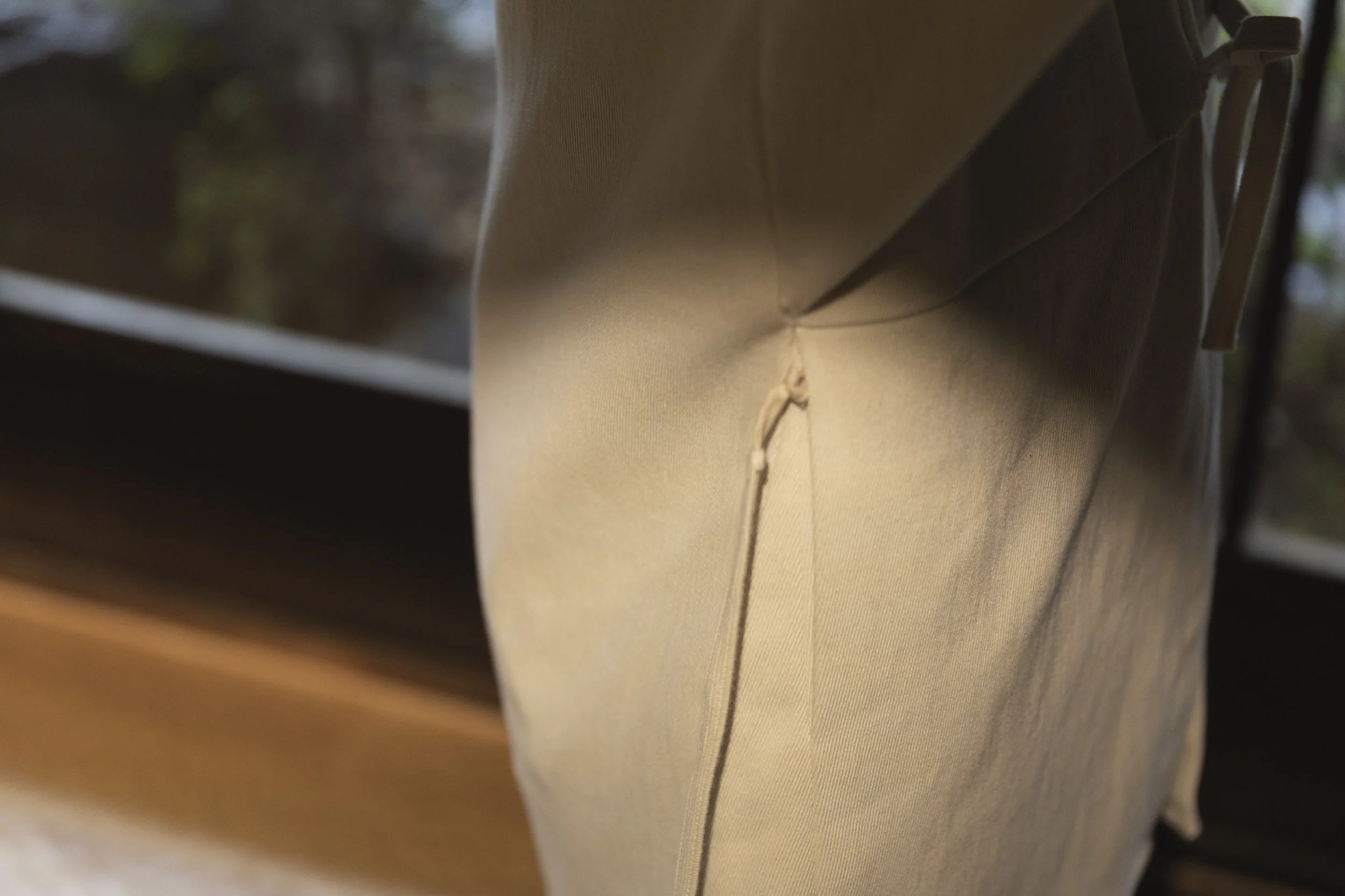
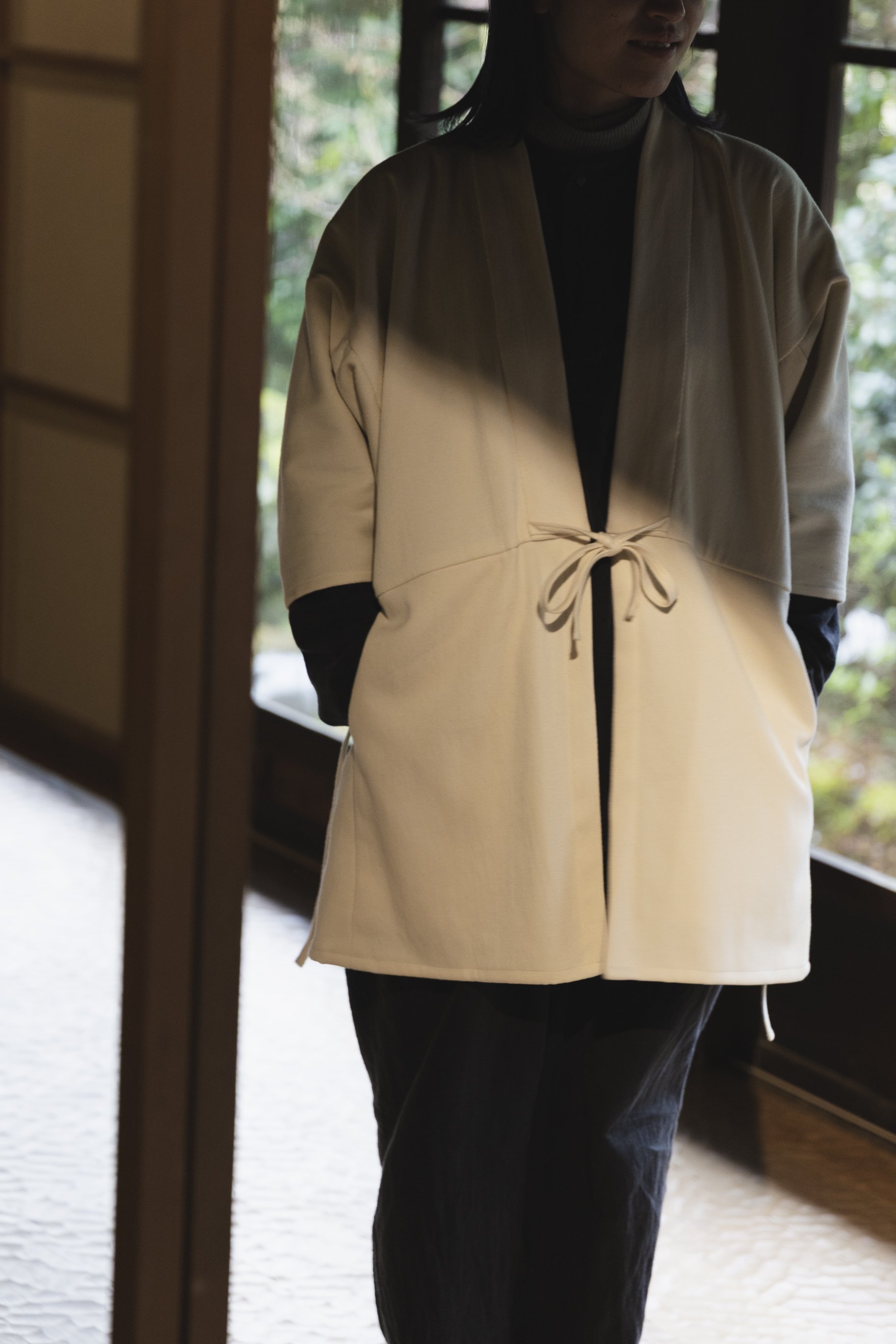
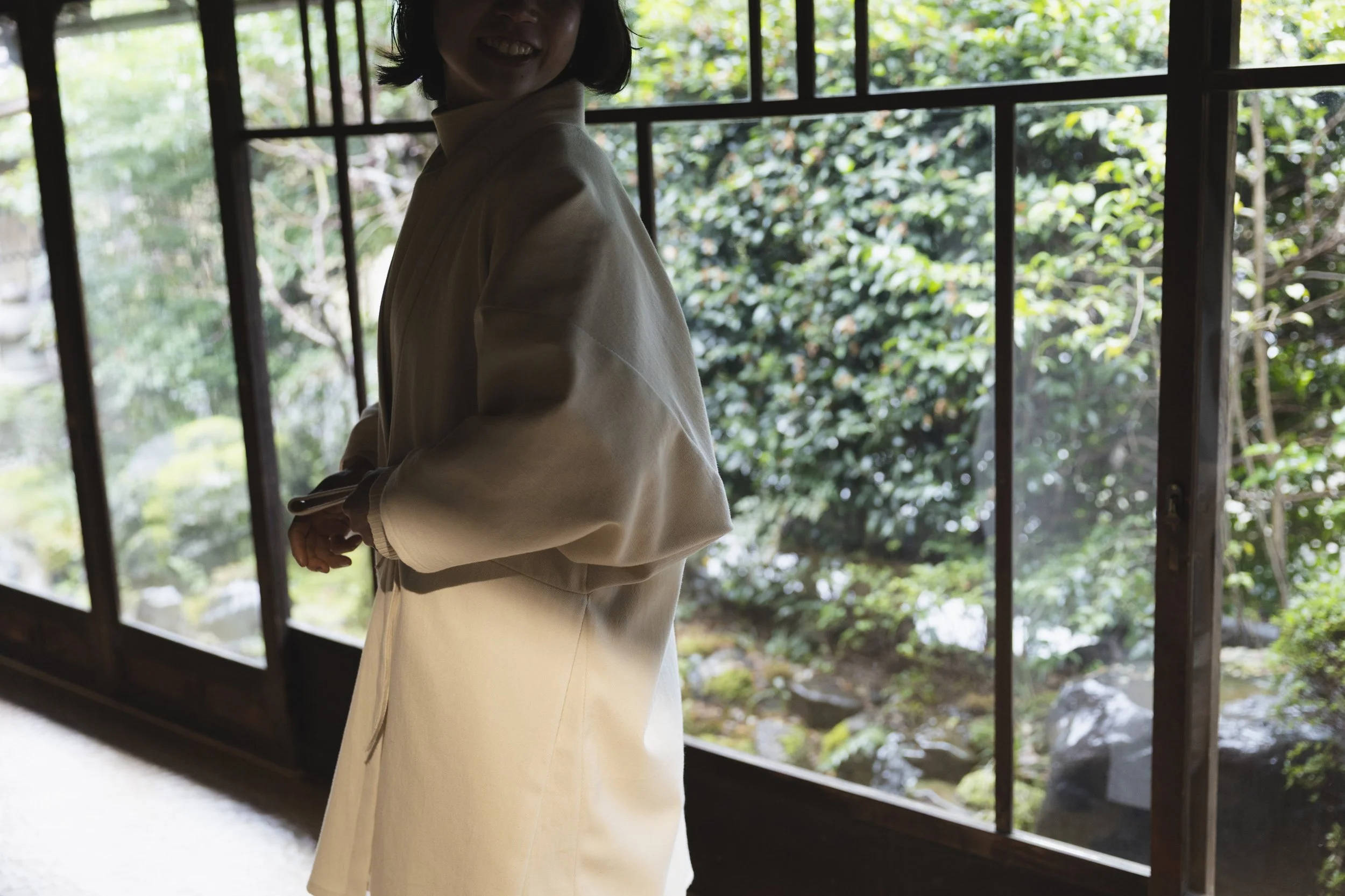
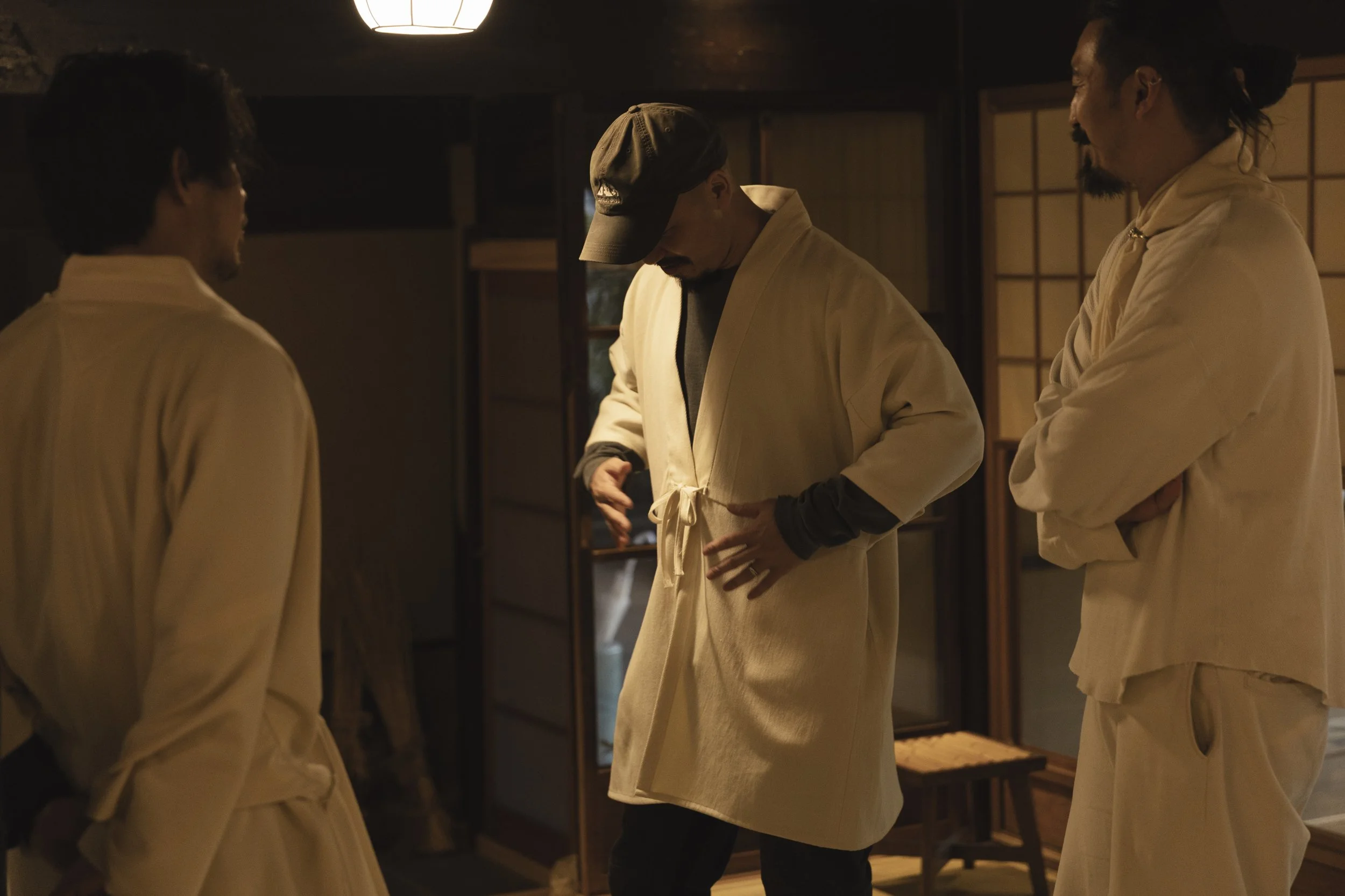
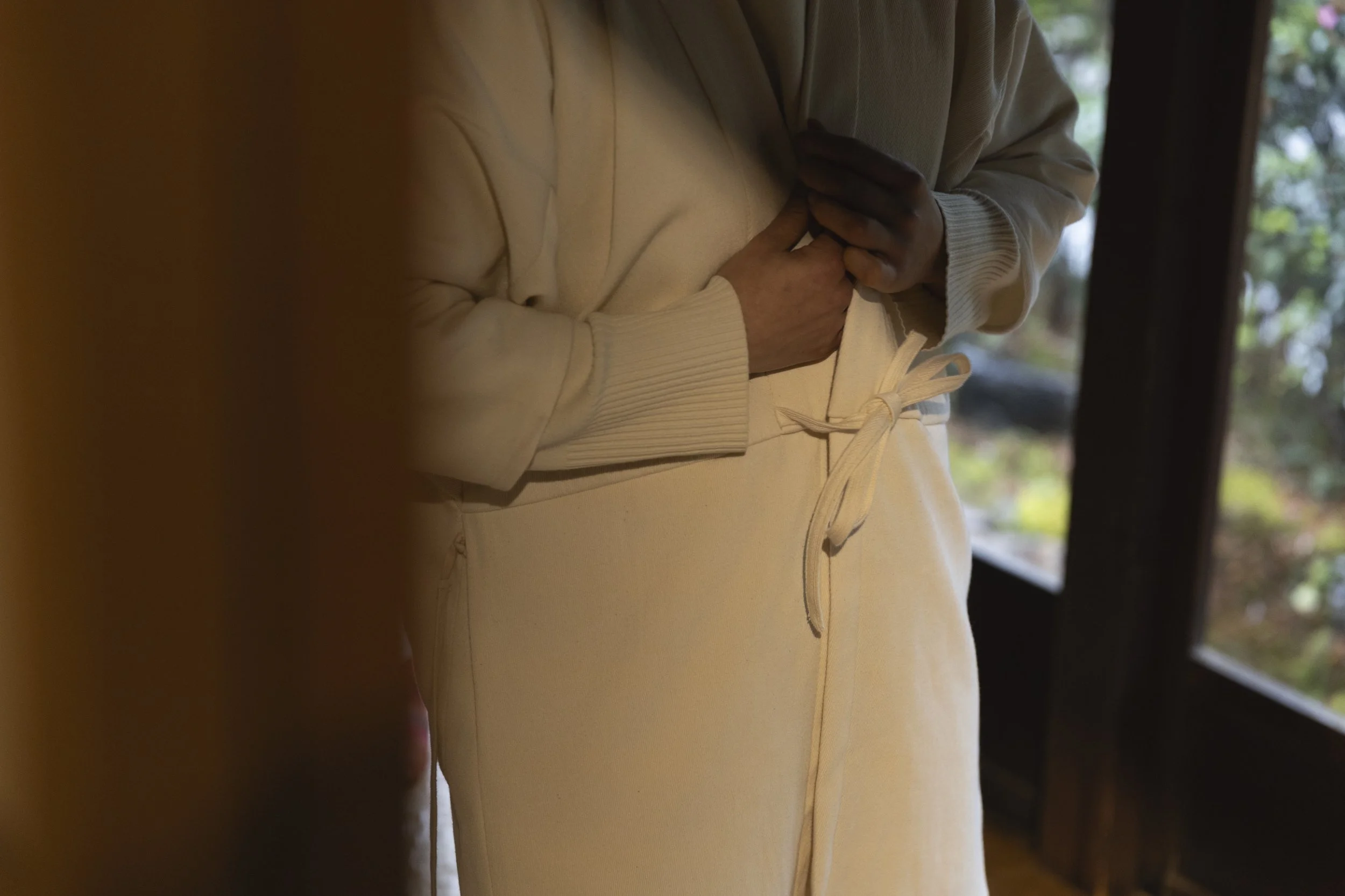
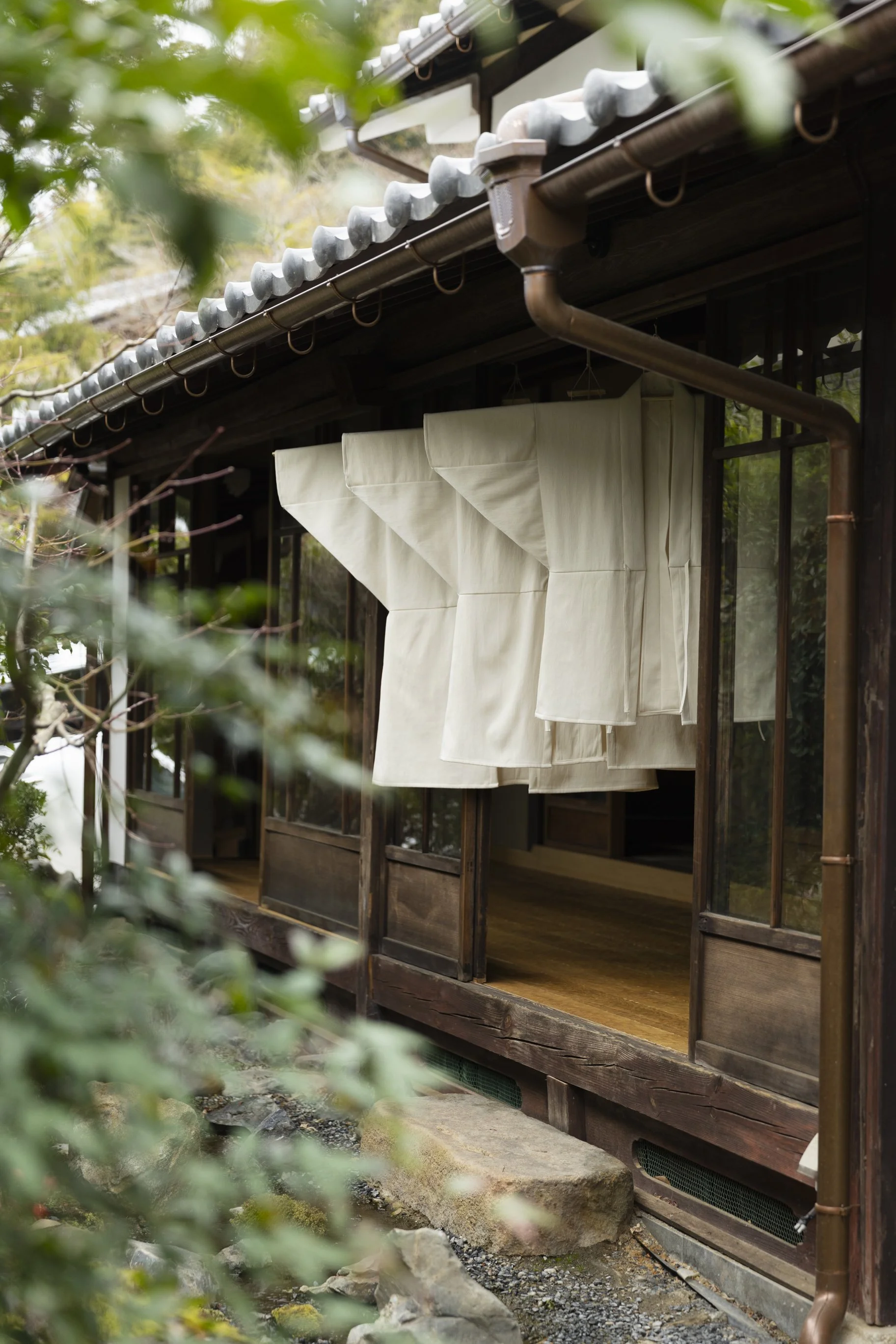
The supple, kinari cotton weave is soft and luxurious yet breathes and feels lightweight upon wearing. It can be tied at the front to be worn both happi-style, as well as tied on the side to be worn samué-style. Happi-style for more everyday wear or when you’re presenting your works. Samué-style for when you’re attending to more detailed handicraft.
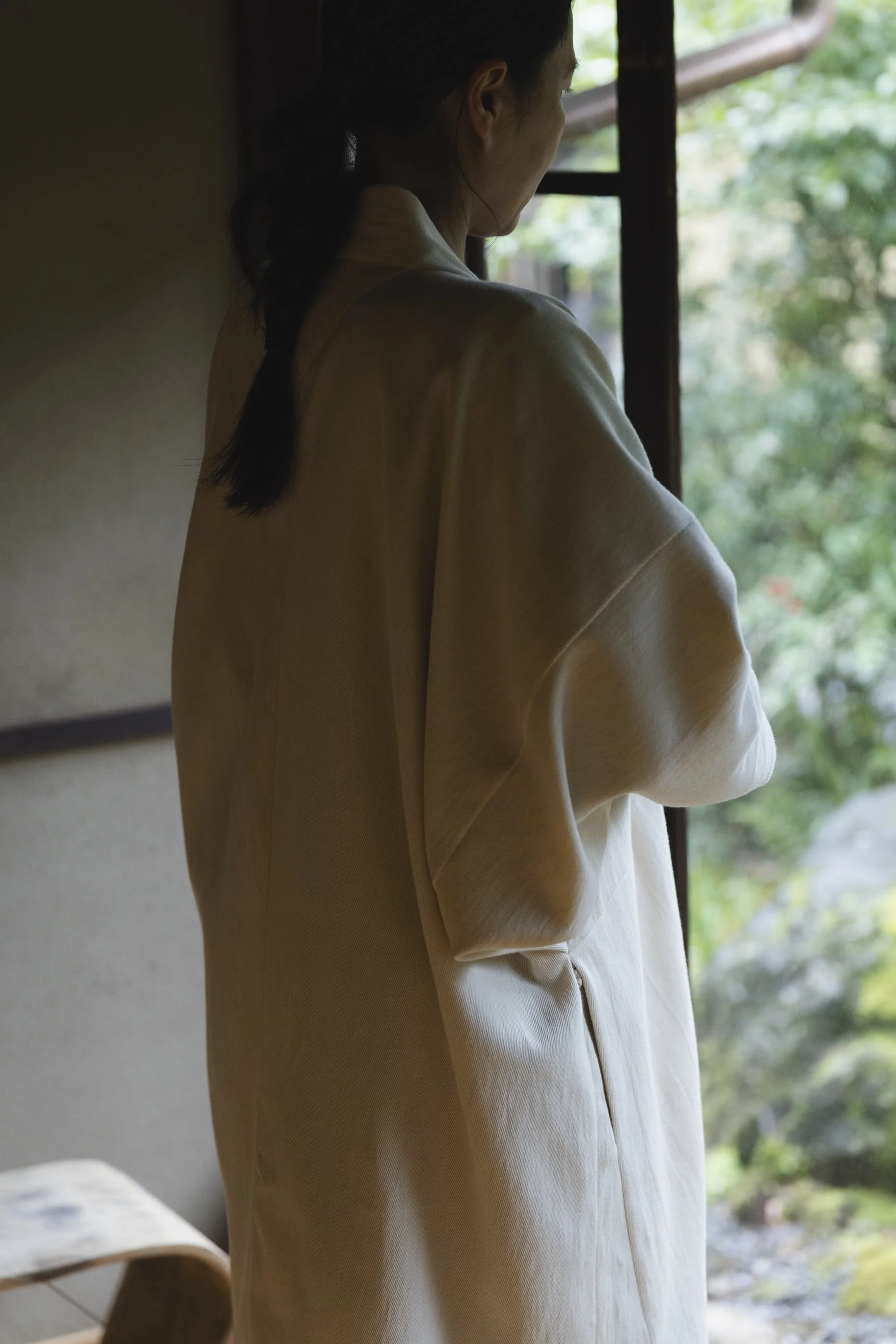
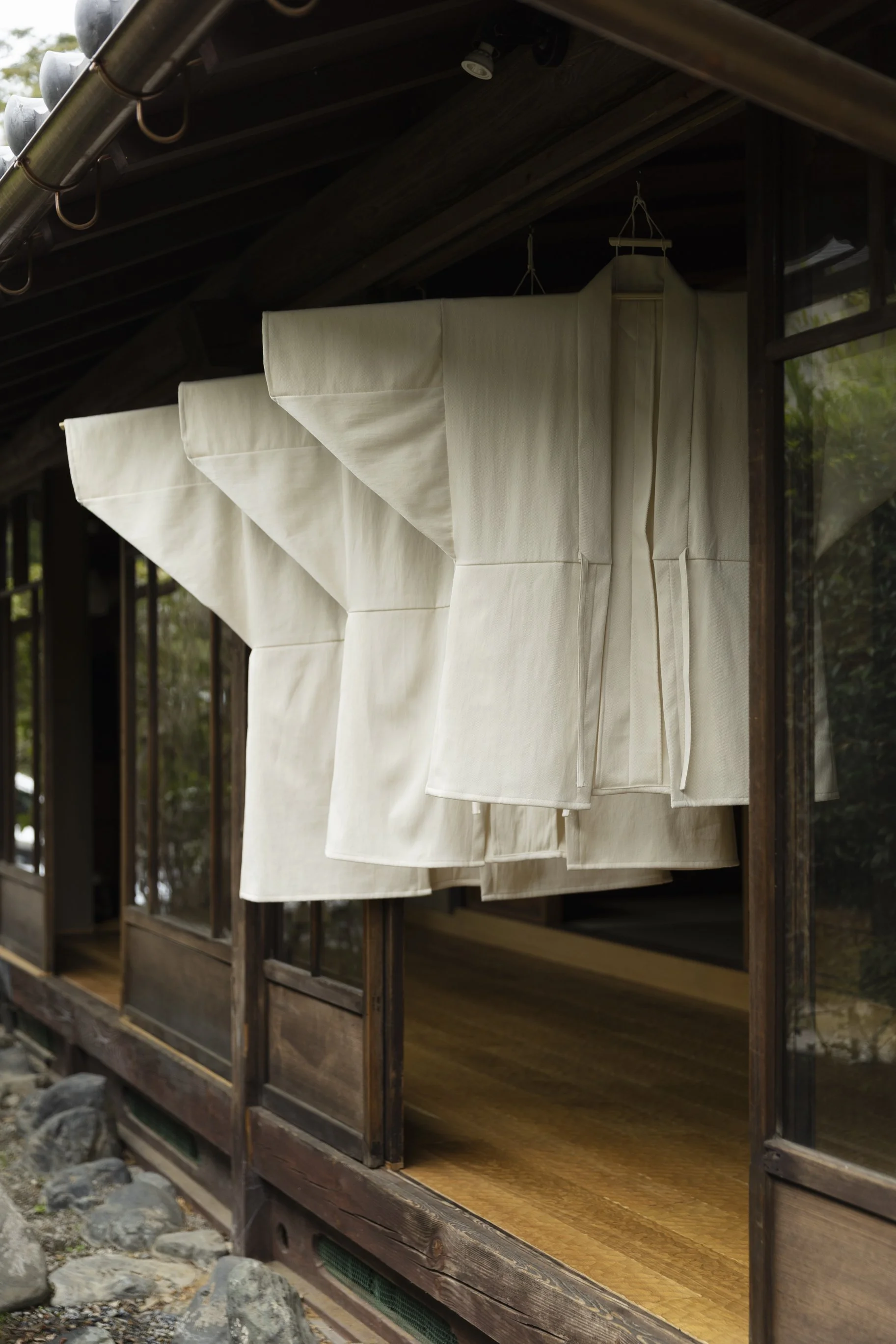
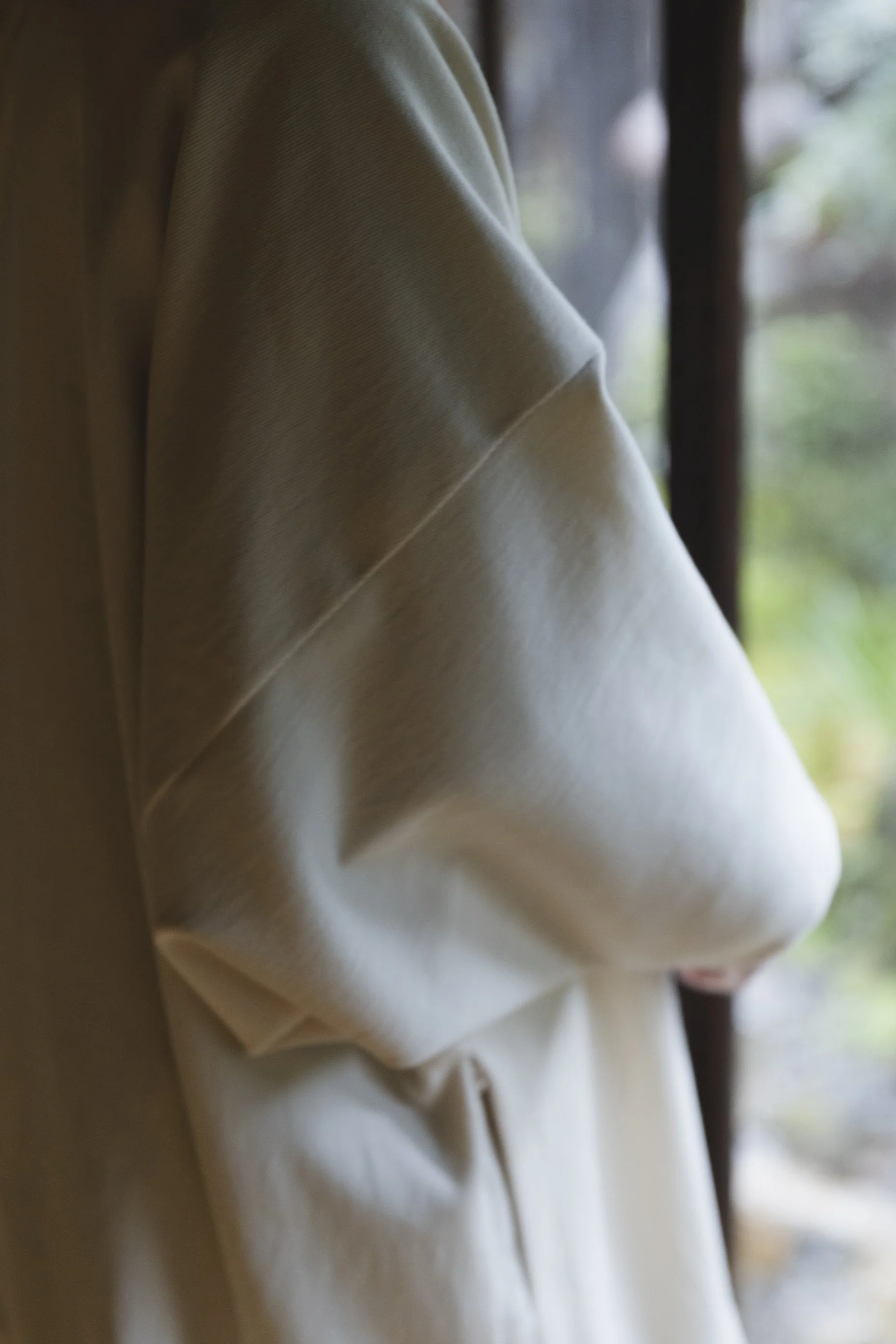
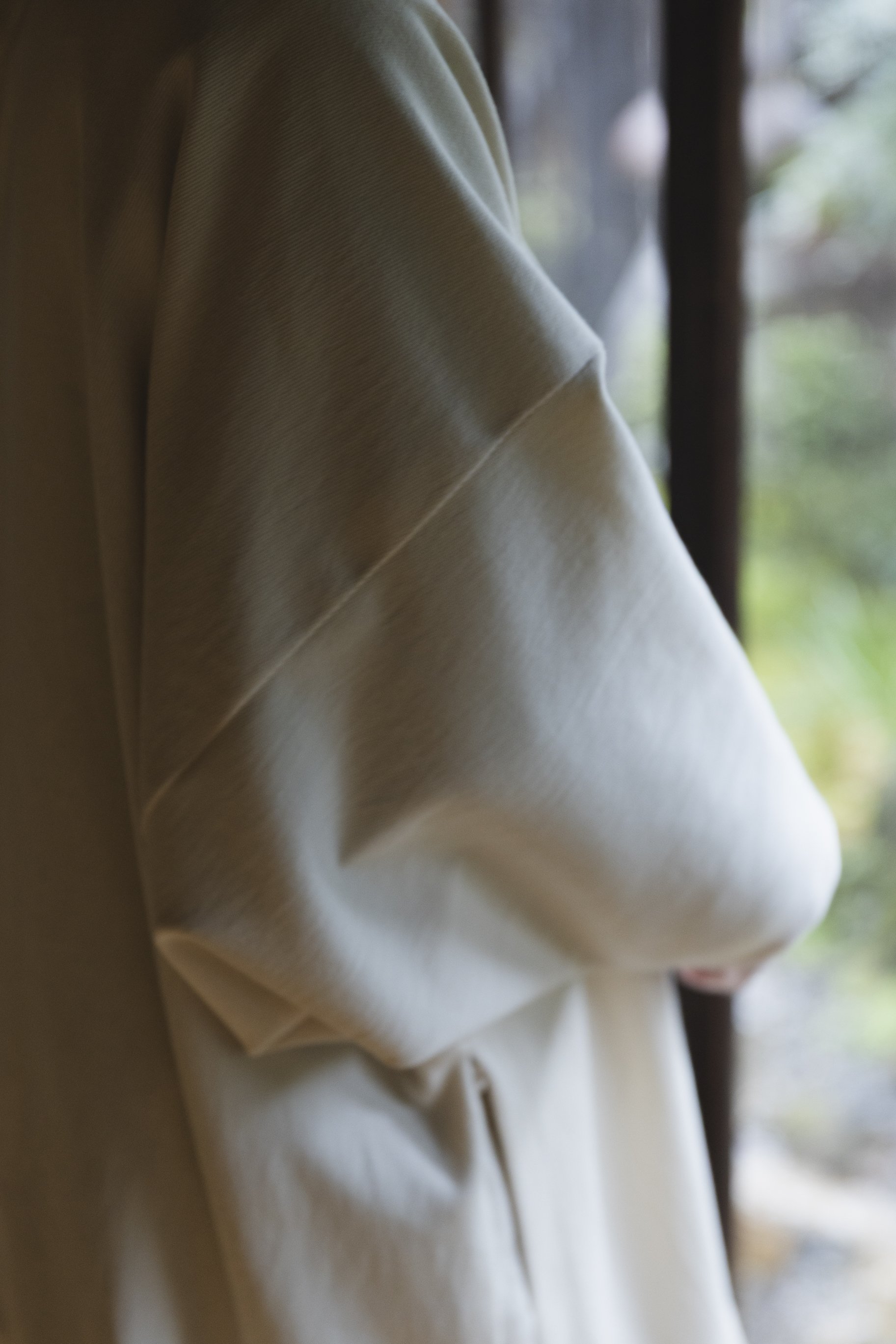
The design pattern is based on generational workwear found from historical documents as well as family heirlooms shared by craftspeople who are in traditional professionals. The mojiri sleeve is a modification of the kimono sleeve that professionals across a plethora of sectors made so that they are able to go about their daily tasks without interference.
After countless interviews with generational professionals, and forging for historical writings and drawings of traditional Japanese workwear, we have arrived at this organic cotton haori jacket. A practical, functional use of materials and techniques rooted in ancestral tradition, that can be seamlessly incorporated into the everyday closet today.
Whether farmer, fisherman, or fermenter, many working-class professionals have historically worn cotton. Without a means or an interest to separate work and life, workwear is dailywear. It is history, family, functionality, and identity.
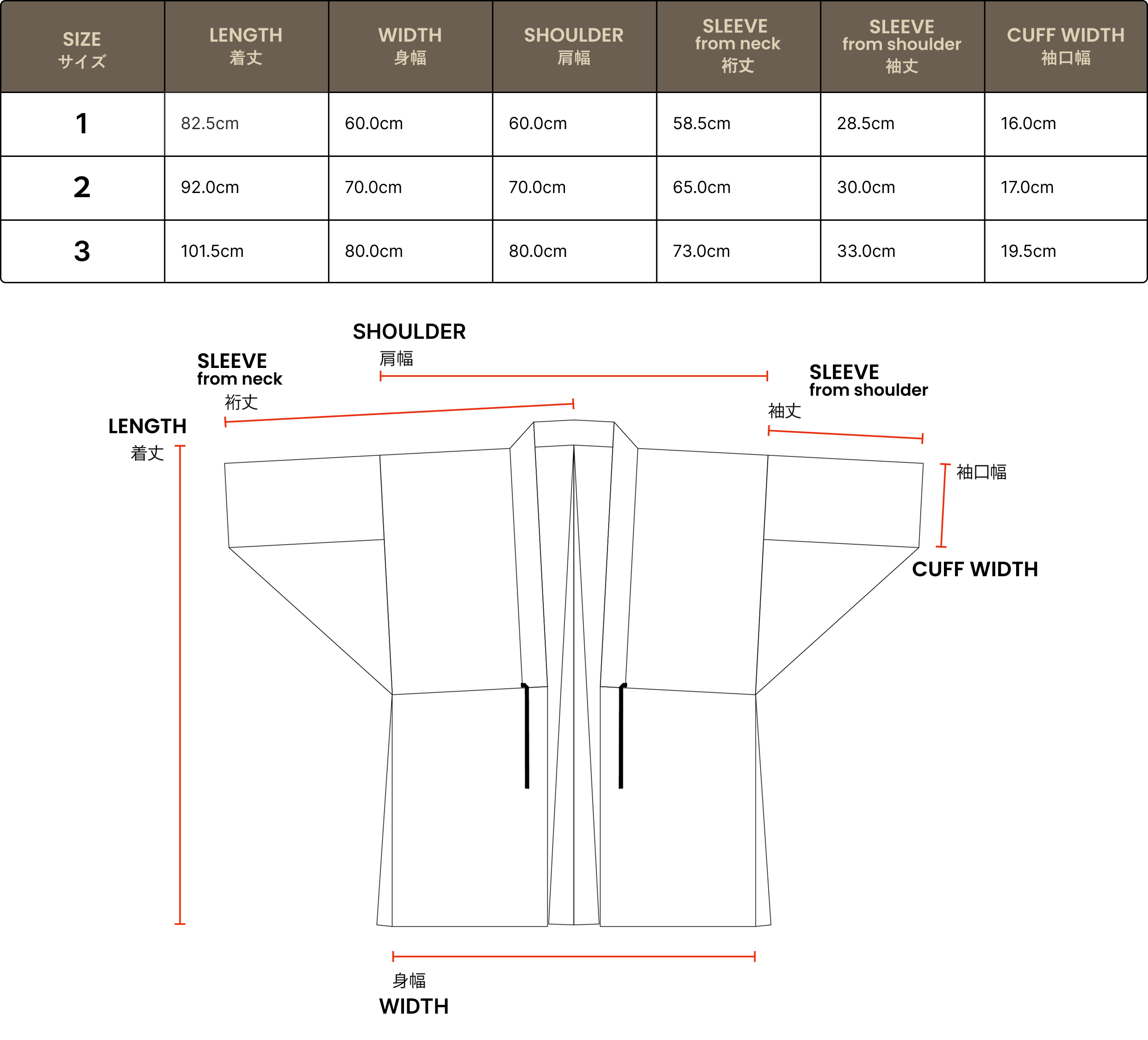
SIZE CHART
三つのサイズをご用意しました。多くの方は、少なくとも二つのサイズを着用できる設計となっています。サイズ選びは、体格だけでなく、羽織をどのような場面で用いるかによって考えることを想定しています。
例えば、とある職人さんは、用途に応じてサイズを使い分けています。細かな作業に向き合う際にはサイズ1を、訪問や人前で披露する場ではサイズ2を、そして日常の外出時にはコートのようにサイズ3を着用しています。用途によって衣服の役割が変わることも、作業着の知恵のひとつといえるでしょう。
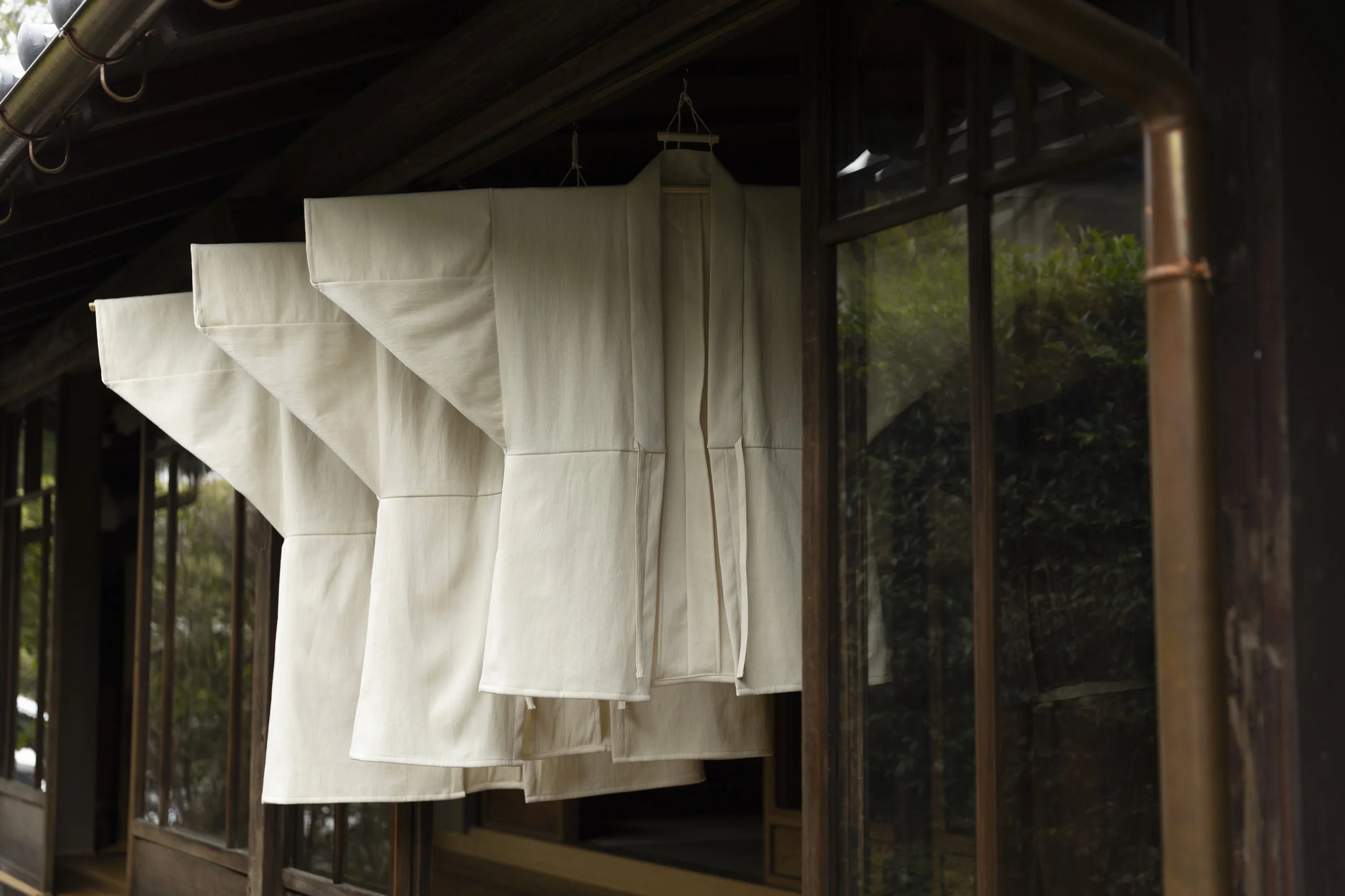
We have created three different sizes. Many people will be able to wear at least two sizes. The intention is for the size selection to be made based not necessarily just on body type, but based on the workwear haori’s use case. One of the craftsman who supported our fieldwork wears Size 1 for incredibly detailed work, Size 2 for house calls and presentations, and Size 3 as an overcoat in day-to-day wear.
ABOUT THE CASE STUDY
約2年にわたり、日本各地で伝統的な作業着の実地調査を行ってきました。そのうちの約半年は、世界各国から集まった熱心で探究心あふれる方々がお供をして研究を重ね、その過程のなかで辿り着いたのが、このオーガニックコットンの羽織です。生成りの綿織物は、ふっくらとした質感を持ちながらも通気性に優れ、身につけると軽やかな着心地を感じられます。前で結べば法被のように日常着として、あるいは作品を披露する場にも適しています。横で結べば作務衣のような着方となり、細かな手仕事に向き合う際にも動きを妨げません。
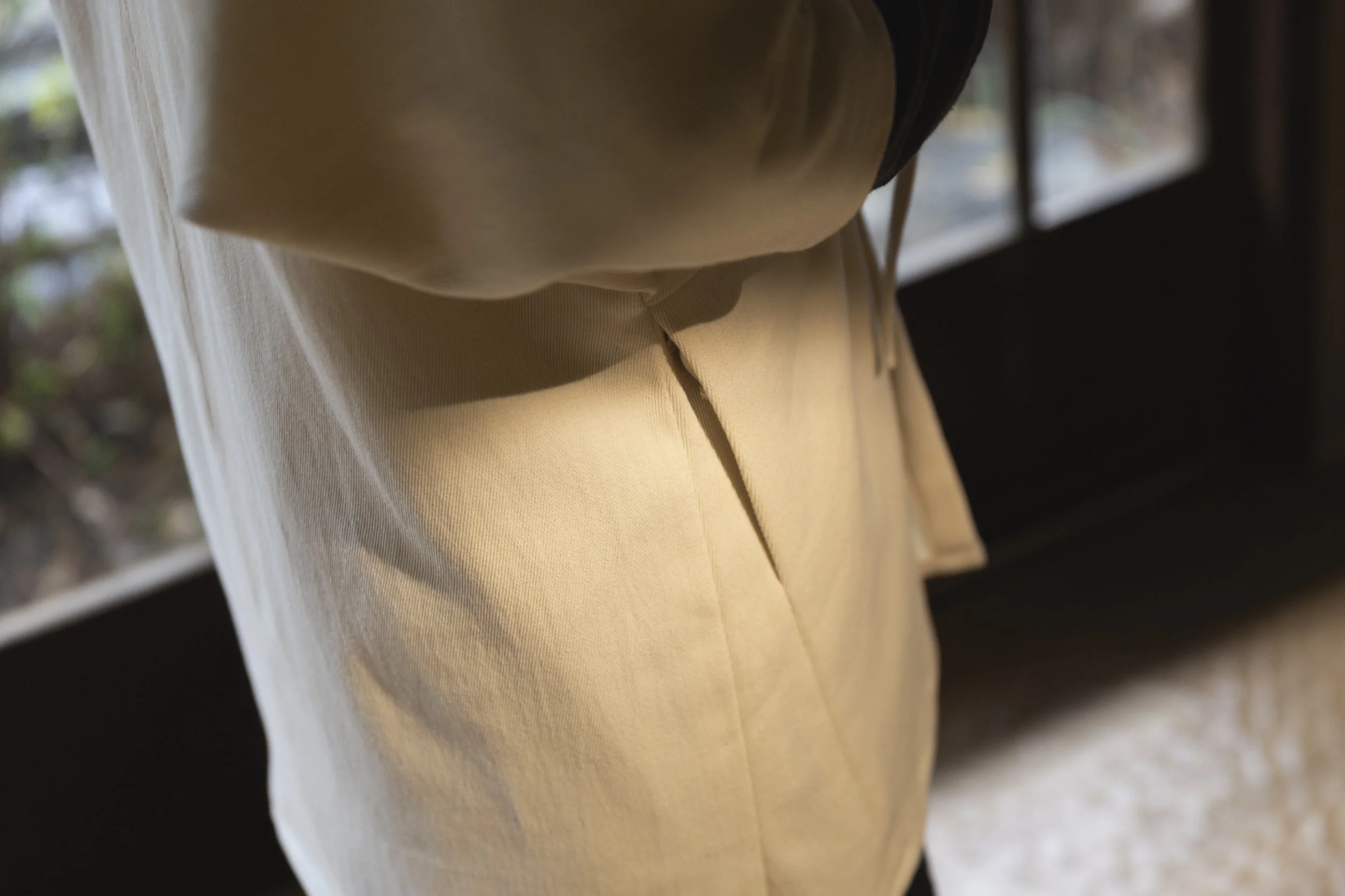
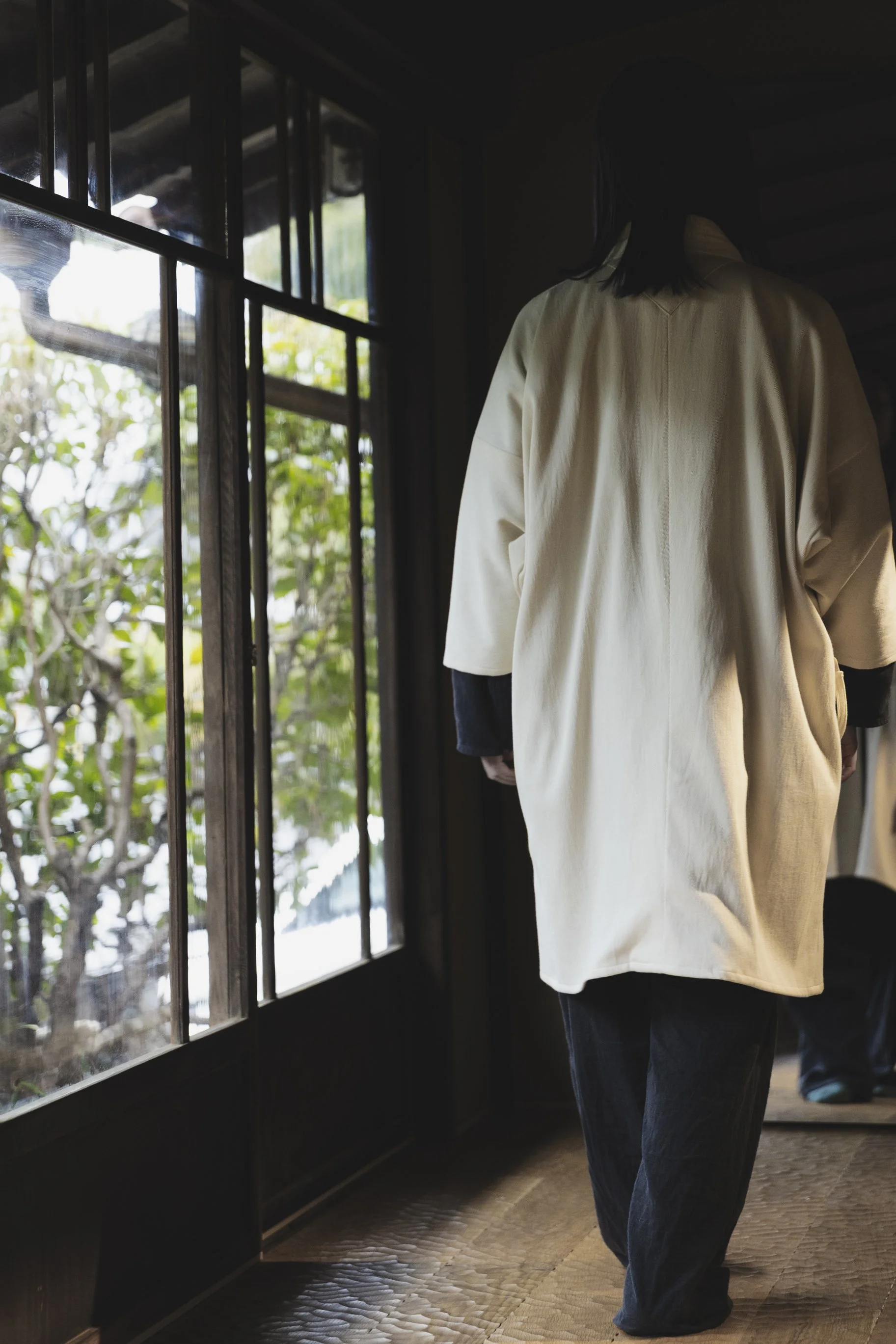
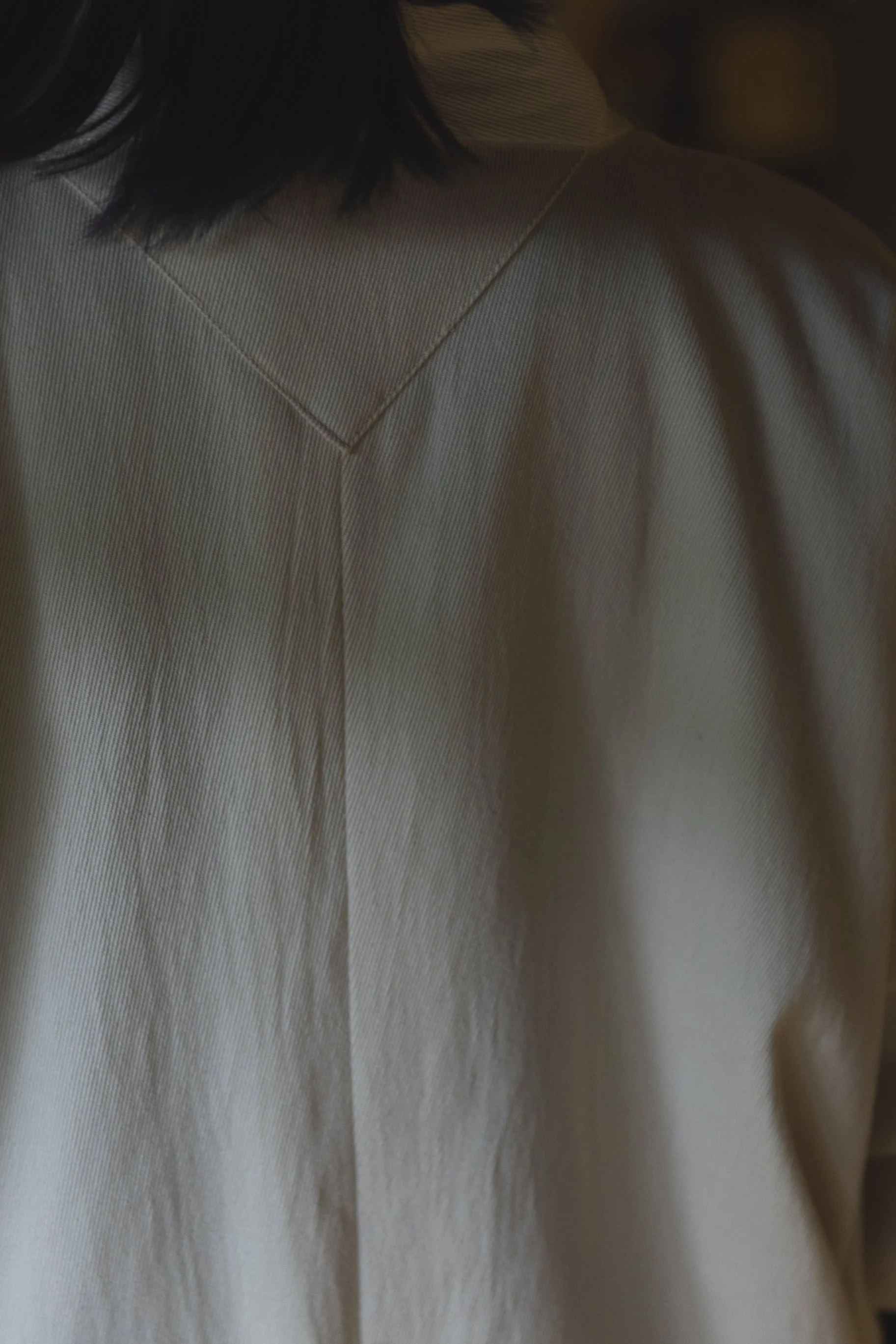
古い文献や絵に残る作業着や、伝統的な職につく方々が見せていただいた実際の作業着を参考にパターンを作っていきました。袖の「もじり」は、着物の袖をもとに、幅広い職業の方が古くから取り入れた、作業の妨げとならないよう工夫して生み出した形です。背中や脇にはわずかなゆとりを加え、現代の身体の動きにもより自然に沿うよう調整しています。両脇の深いポケットは道具やスマートフォン、手帳などを収めるためのものです。背面のループは、一日の仕事を終えたあと、衣桁やフックに素早く掛けておくために設けられています。また、背中には背守りを儲けてます。魔除けでもあり、痛やすい部分を補助するためでもあります。
生成りは、綿そのものが持つ自然の色です。まずはこの状態で着用することをおすすめします。やがて擦れや変色が現れる箇所に気づくでしょう。それは日々の仕事が衣服に刻まれた痕跡でもあります。その後、染め直すことで、また異なる表情を楽しむことができます。縫い糸にもオーガニックコットンを使用しているため、草木染めや藍染めなど、どの染色にもよくなじみます。
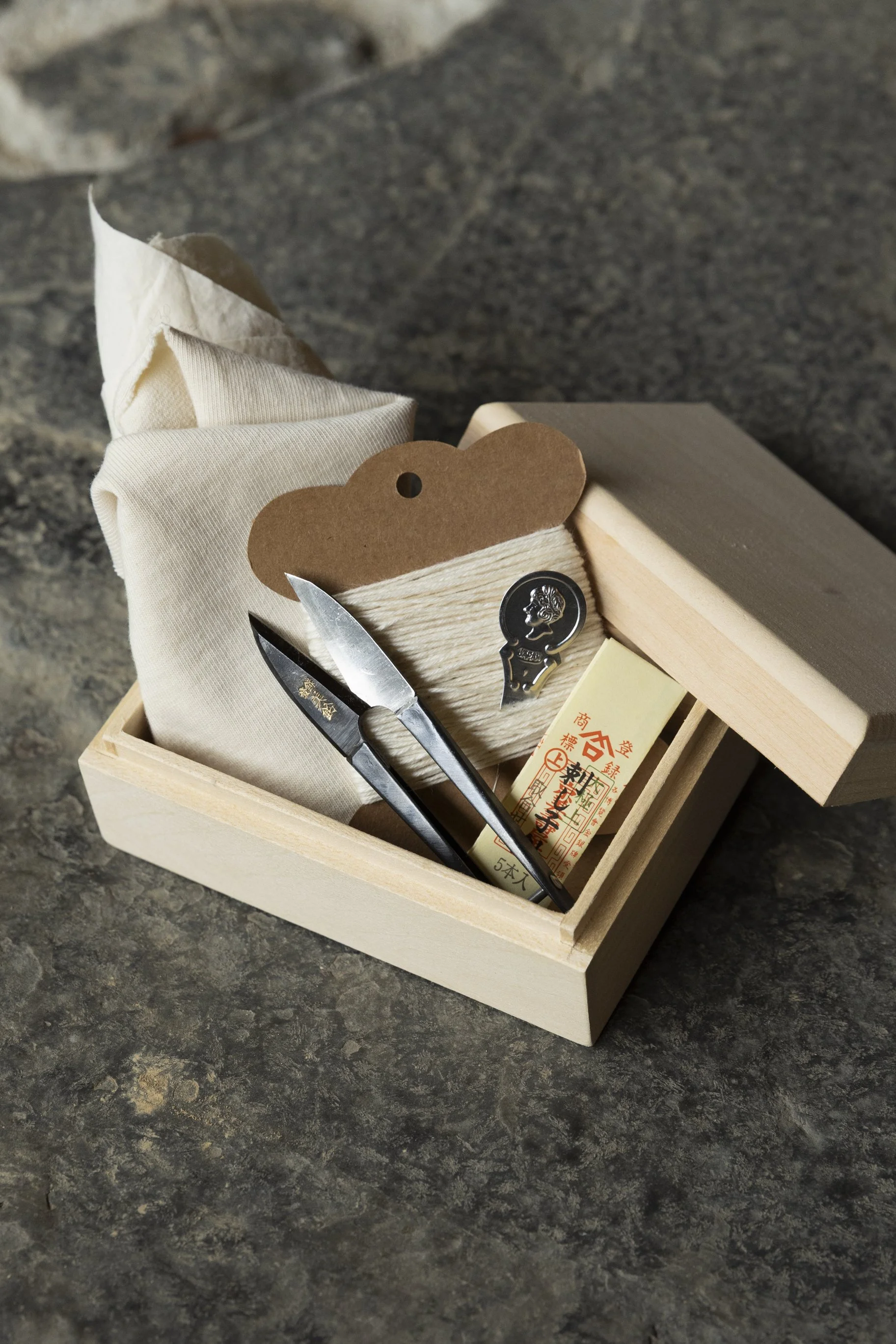
さらに、この作業着を自ら整え、長く使い続けるための道具として、刺し子メンテナンスキットも用意しました。各地での調査を通じて繰り返し語られてきたのは、「作業着は手入れしてこそ価値がある」という考え方です。
漁師、絵描き、大工など、多くの働く人々は綿の衣服を身につけてきました。古い着物を解いて仕立て直し、擦り切れた布を継ぎ合わせ、肘や膝、前腕や襟元には刺し子を施して耐久性を高める。仕事と生活を分ける必要も、意識もほとんどなく、作業着はそのまま日常着でもありました。そこには、歴史、記憶、実用性、そして個々の生き方が織り込まれています。
After approximately two years of fieldwork based on countless interviews with generational craftspeople, and forging for historical writings and drawings of traditional Japanese workwear, we have arrived at this organic cotton haori. A practical, functional use of materials and techniques rooted in ancestral tradition, that can be seamlessly incorporated into the everyday closet today.
The supple, kinari cotton weave is soft and luxurious yet breathes and feels lightweight upon wearing. It can be tied at the front to be worn both happi-style, as well as tied on the side to be worn samué-style. Happi-style for more everyday wear or when you’re presenting your works. Samué-style for when you’re attending to more detailed handicraft.
The design pattern is based on generational workwear found from historical documents as well as family heirlooms shared by craftspeople who are in traditional professionals. The mojiri sleeve is a modification of the kimono sleeve that professionals across a plethora of sectors made so that they are able to go about their daily tasks without interference.
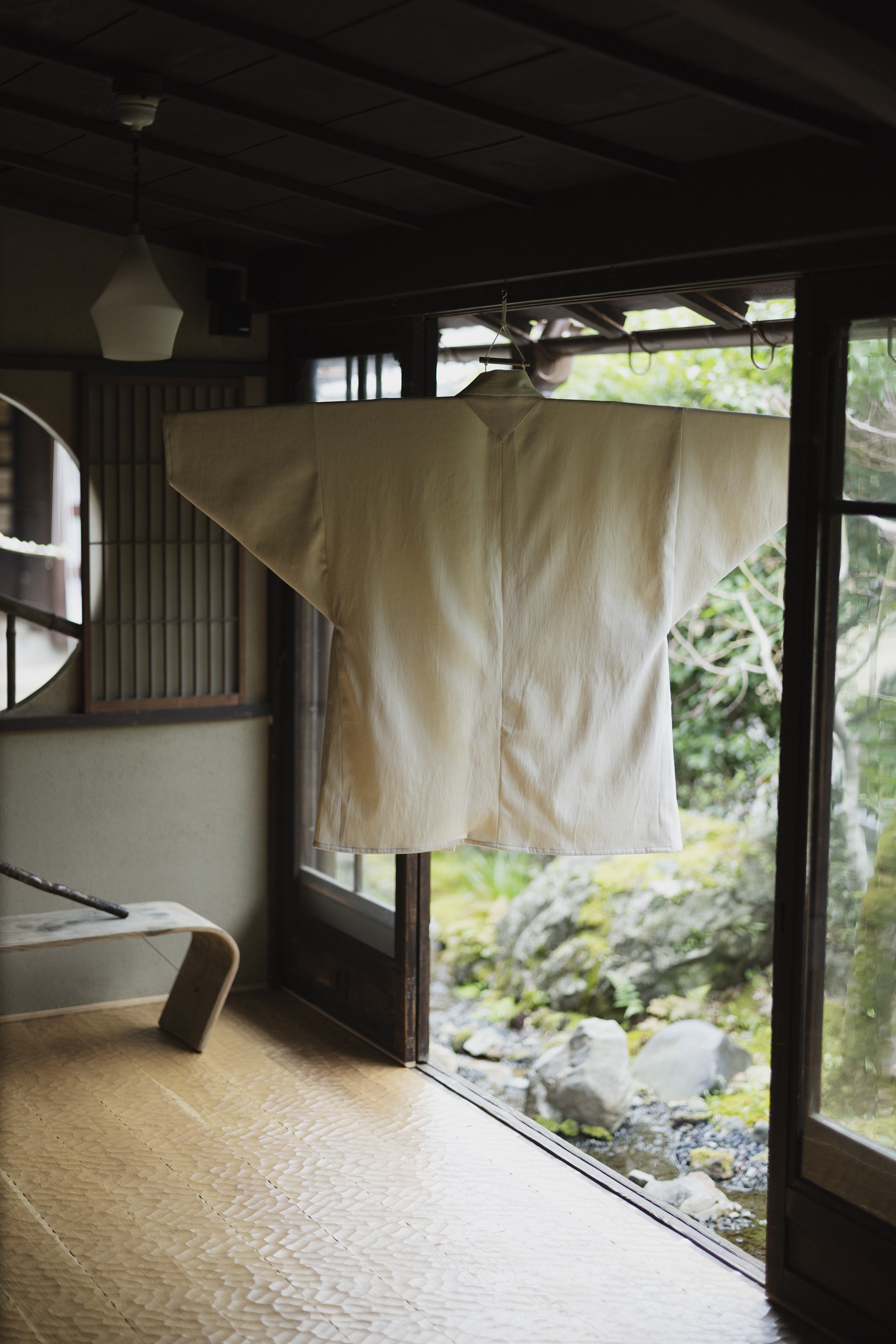
Small alternations like additional leeway in the back and the sides, allow for greater ease of movement for modern bodies. Deep pockets on both sides are meant for tools, phones, and notebooks. The loop on the back means that you can stash it away quickly on a coat hook after your day’s work. And on the back there is also a semamori, to protect you from evil spirits and also to strengthen this area that wears quickly.
Kinari is the natural color of the cotton. We suggest you first wear it in this way. You’ll notice the areas that get worn or discolored. It is where your hard work appears in physical form. Then you’ll be able to enjoy it from a different perspective upon dyeing. It will take to all types of dyeing, including natural botanical or fermented dyes, as the sewing thread is also organic cotton.
Finally, we have also made a Sashiko Maintenance Kit for those of you who would like the tools and materials necessary to customize, repair, or reinforce your workwear haori. In our fieldwork, it has been called out time and time again, that maintaining workwear is as important as the workwear itself. Upcycling old kimono, patching together shabby textiles, sashiko stitched areas like elbows, knees, forearms, and neck lines increase durability.
Whether farmer, fisherman, or fermenter, many working-class professionals have historically worn cotton. Without a means or an interest to separate work and life, workwear is dailywear. It is history, family, functionality, and identity.