
SEARCH JOURNAL ENTRIES

Microseason: Citruses Ripen
Tachibana are said to be one of the native citruses of Japan. Flourishing in the warmer areas of the country, from Shizuoka through Okinawa. However, they are now on the endangered species list, as cultivated, hybrid citrus varietals are favored for their size and sweetness.

Microseason: Northern Winds Sweep Foliage
When cold Northern winds begin to blow, fallen leaves dance along the earth’s floor. Engaging all of our five senses: seeing, feeling, hearing, touching, and evening smelling all at once. It’s a sign that clouds will be pushed away, making for sunnier skies ahead. In Japan, Winter is associated to blue skies.

Microseason: Rainbows Hide
During this time of year, the clouds play a strong role in the way sunlight and moonlight dance on the earth’s floor, and creates shadow. Shadow and light, together as a duo, are the most intangible of the primary heritage materials of Japan.

Microseason: Daffodils Bloom
While Japan is an island country, it is without doubt that its culture has been influenced by the Silk Road that spanned the Eurasian continent for 1700 years. Suisen, or Daffodils, are an expressive specimen of this.
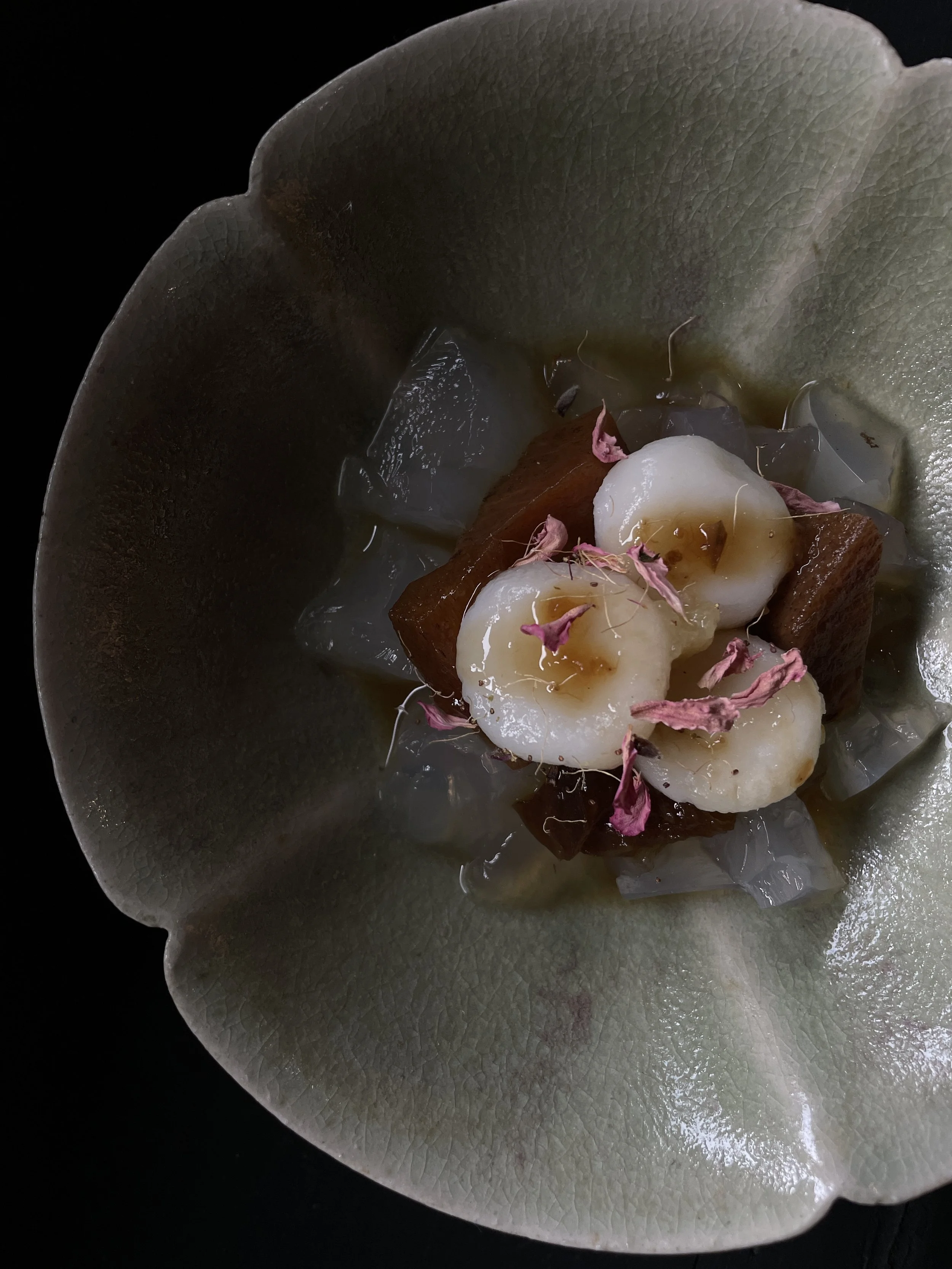
Microseason: Earth Begins to Freeze
With these warmer-than-usual temperatures, it’s hard to believe that we have entered the microseason, Earth Begins to Freeze. But up in the mountains, the floor begins to freeze, just a bit, in the wee hours of the morning.

Microseason: Camellia Flower
From Autumn through Spring, Tsubaki, or Camellia, blossoms are seen across much of the year. Today, it is said that there are approximately 2200 varietals in Japan alone. The Tsubaki plant has serviced the Japanese people for thousands of years as a vital material for living.