
SEARCH JOURNAL ENTRIES

Microseason: Mid-Summer Flora Emerge
Appearing shortly after Summer Solstice, Mid-Summer flora emerge. The season when we greet one another not with a simple good morning or good evening, but add that we cannot believe that we are already "circling back".
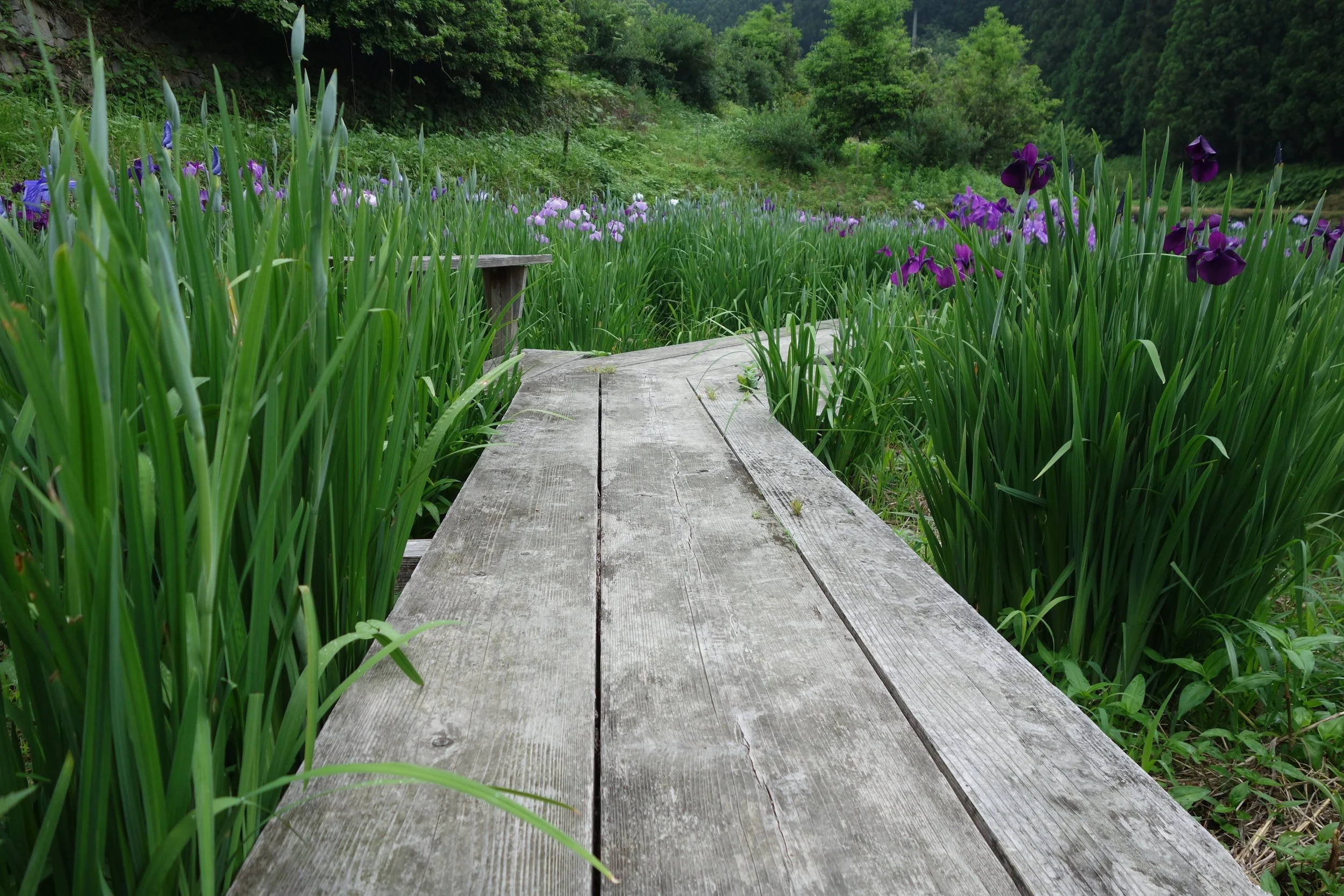
Microseason: Irises Flower
Mid-summer in the Japanese archipelago means that irises begin to unfurl their distinctive blooms. Irises carry medicinal significance, as well as aesthetic. Though often grouped together under the term “iris,” in Japan we categorize irises into three types: shobu, ayamé, and kakitsubata. Each refers to a different species with unique habitats, forms, and cultural associations.

Microseason: Prunella Wilt
Prunella with its violet flower spikes, appear briefly before withering in the heat. Utsubogusa has long been used in traditional Japanese medicine for its cooling and anti-inflammatory properties. In traditional medicinal practices, it has been categorized as bitter and cold, suited to clearing internal heat and reduce swelling.

Microseason: Plums Ripen Yellow
As rice paddies fill with water and fireflies show-off their light, a subtle change unfolds in nearby gardens, orchards, and mountain groves. The green fruit of the umé tree begins to ripen into a blushed yellow.

Microseason: Withering Flora Birth Fireflies
Our ancestors believed that fireflies were born from decaying grass. This impression may have arisen from the hidden transformation of their larvae, which pupate within the soil and later emerge as glowing adults. The mystery of hotaru seemed to spring forth from withering vegetation.

Microseason: Praying Mantises Emerge
The emergence of the praying mantis marks an early summer transition. Tiny hatchlings, newly released from their protective eggs, hop onto the surrounding grasses. Kamakiri is one of the few insects widely recognized across Japan as a beneficial presence in the field.